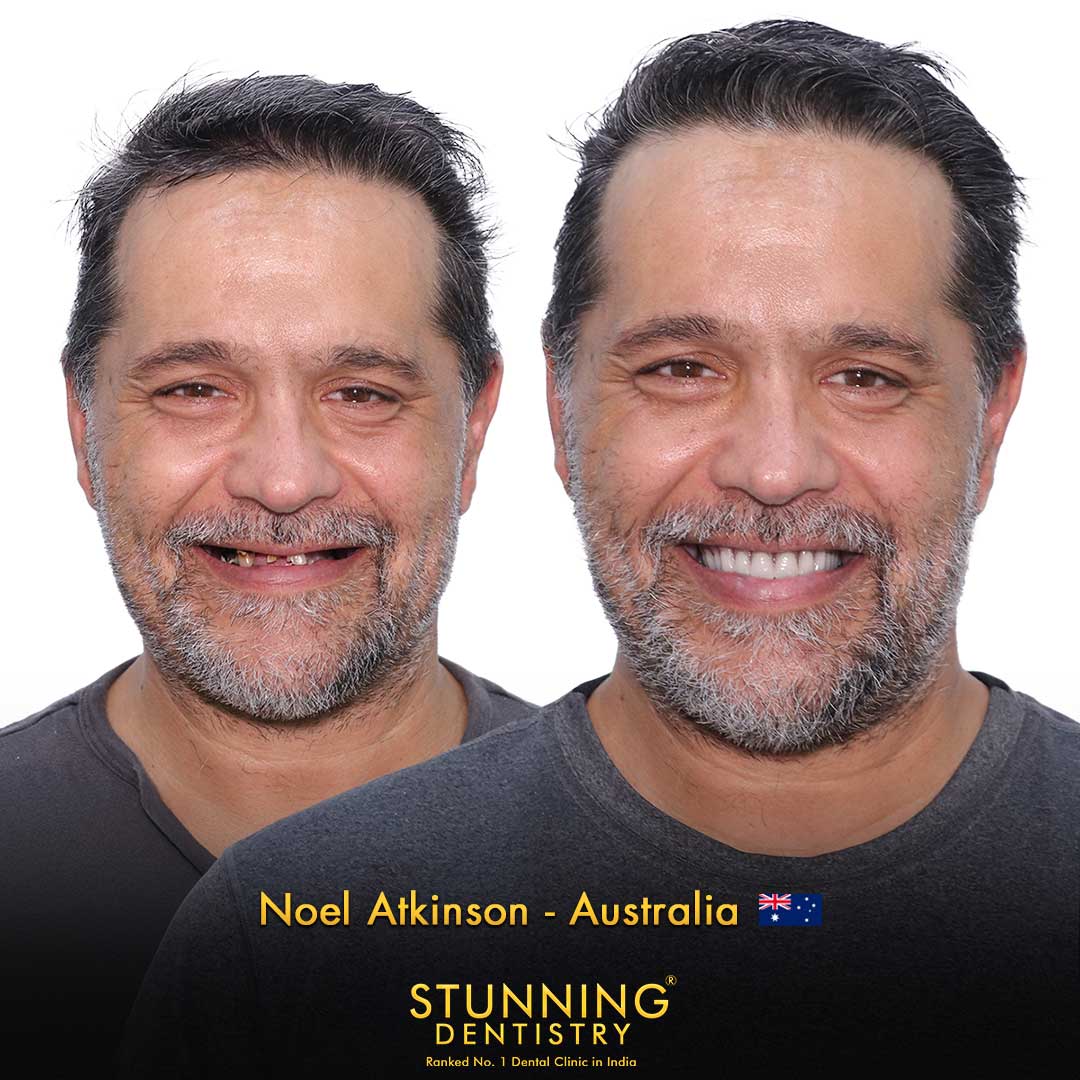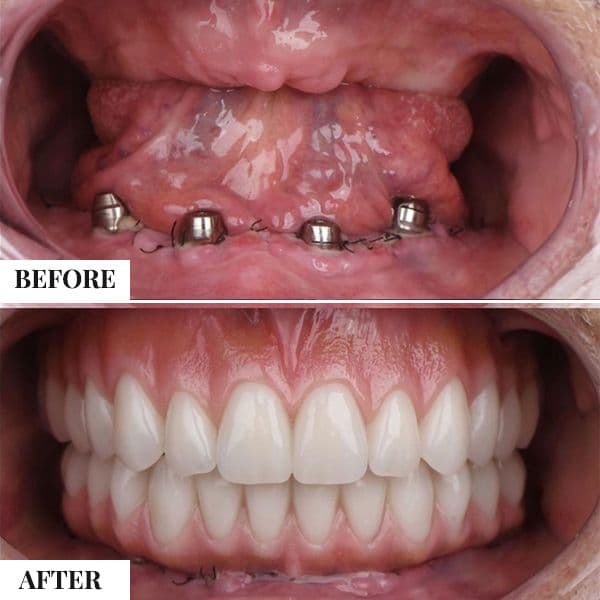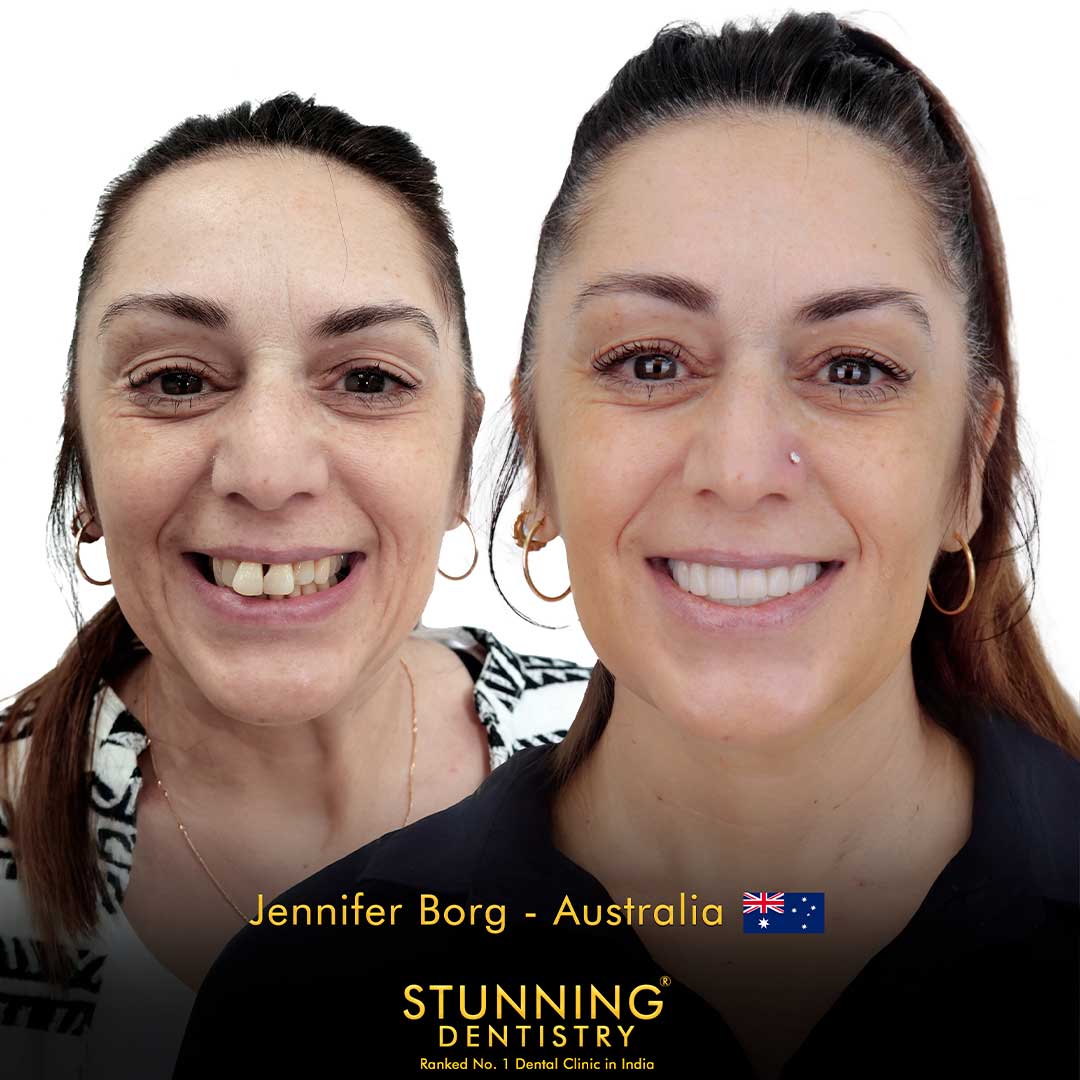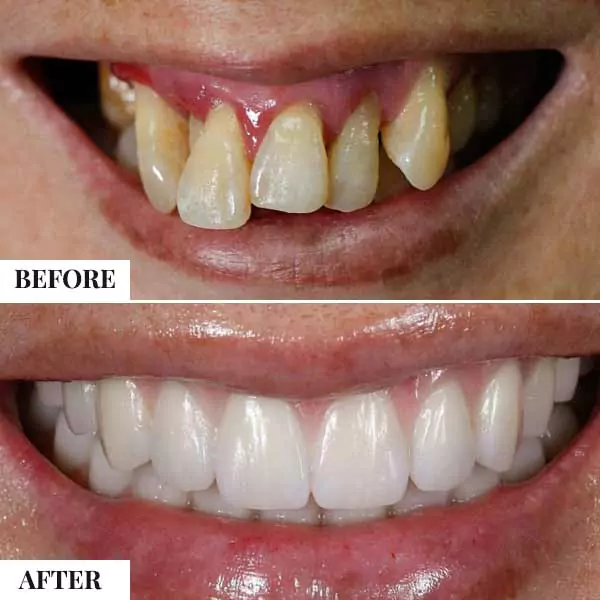
Full Mouth Rehabilitation, Rebuilding an Entire Dentition Through a Sequenced, Multi-Specialist Protocol
- Most patients who arrive on this page have already had a conversation that started with a sentence like "I'm afraid the whole mouth is going to need rebuilding." A Rome prosthodontist has pointed at a CBCT and traced the pattern of wear, the collapsed bite, and the chain of failing restorations.
A Milan periodontist has explained that no single tooth is the problem, the problem is the system the teeth sit inside.

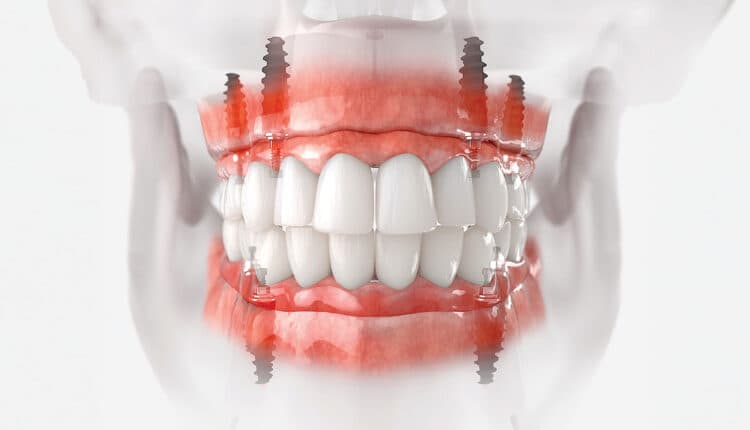
Full-Arch Rehabilitation
Complete upper or lower arch reconstruction using strategically placed implants to restore full function and structure.
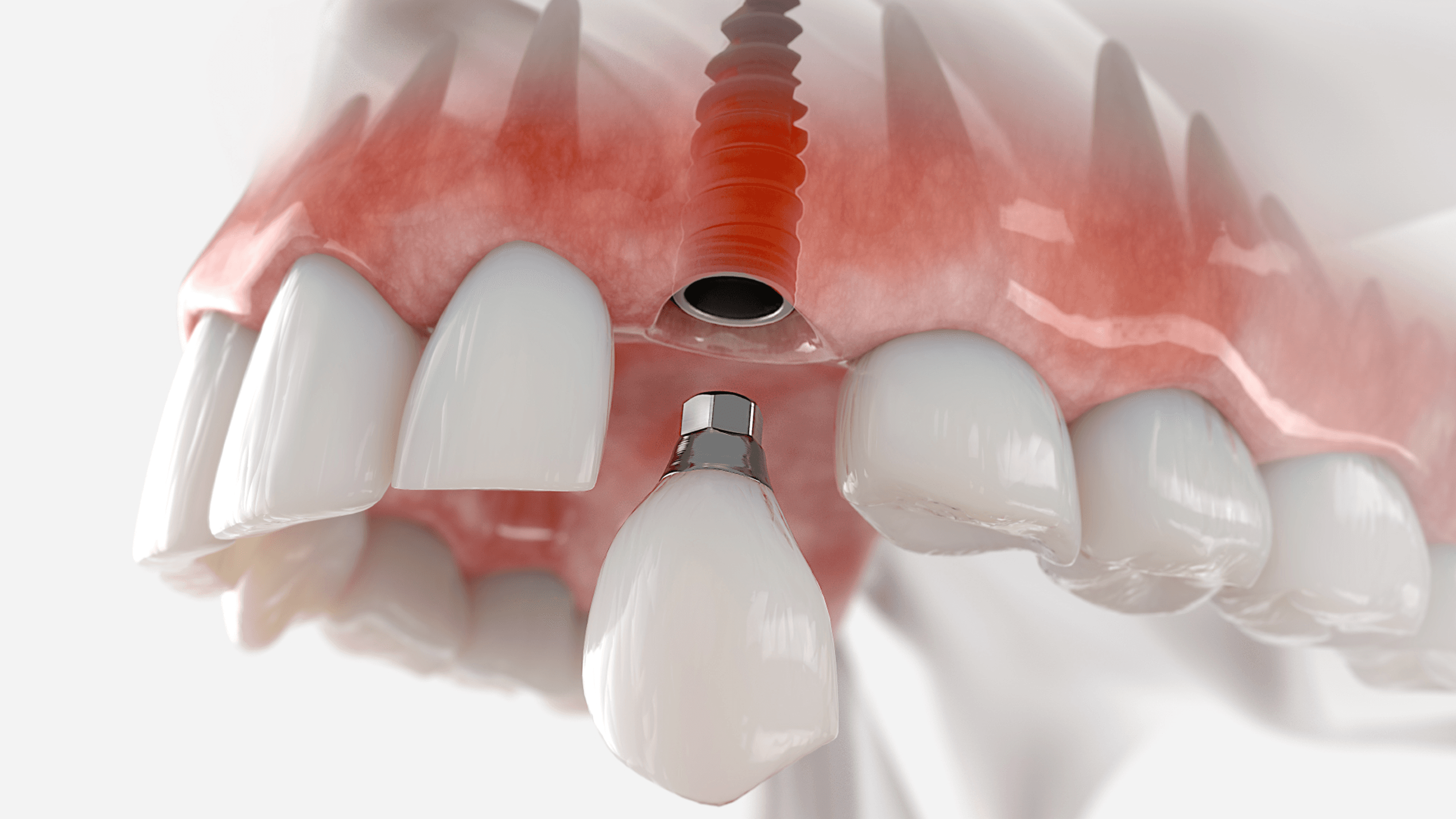
Immediate Load
Full-arch or multiple implant cases where provisional teeth are placed shortly after surgery in suitable clinical conditions.
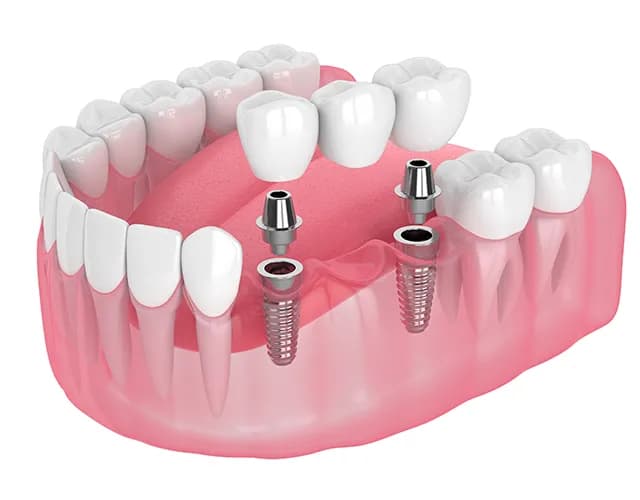
Multiple Implant Rehabilitation
Complete upper or lower arch reconstruction using strategically placed implants to restore full function and structure.
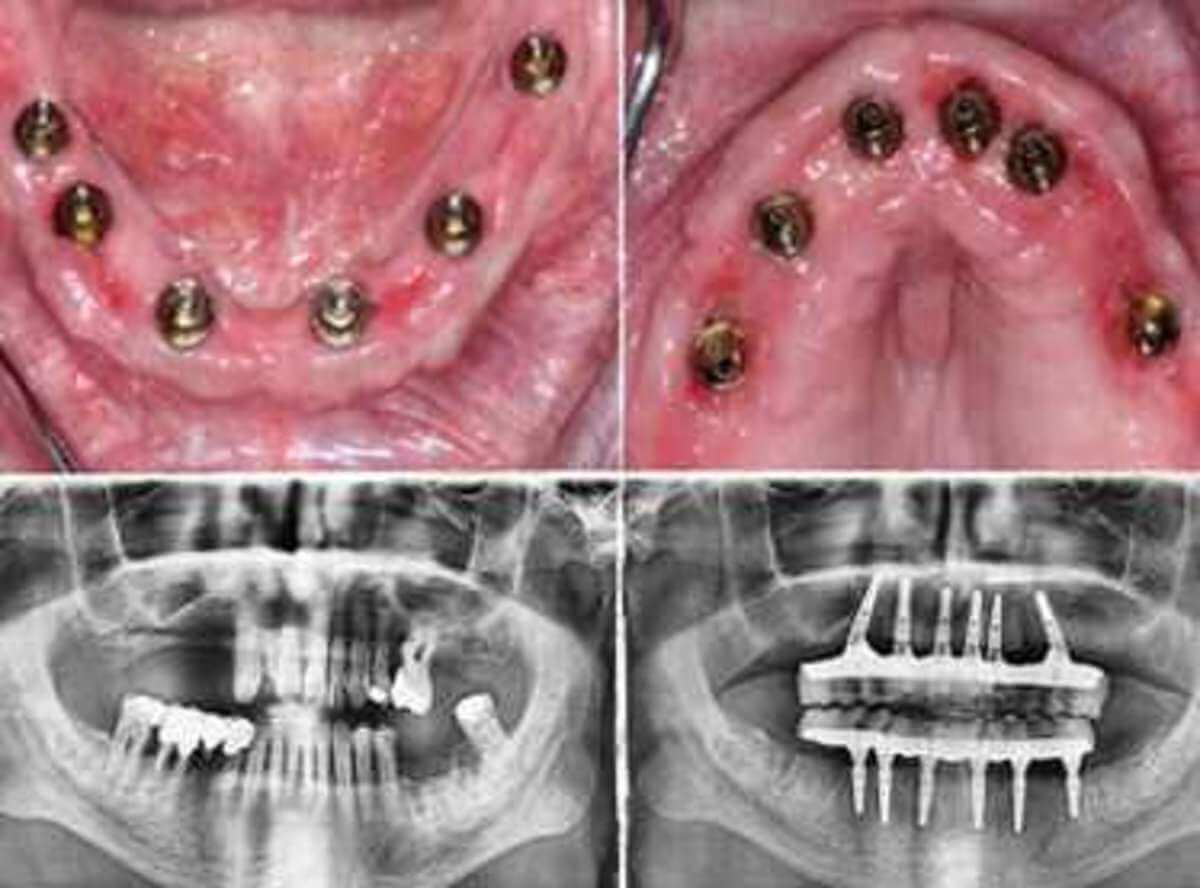
Single Tooth Implant
Single-tooth replacement with an implant and crown for a natural-looking, long-lasting result.
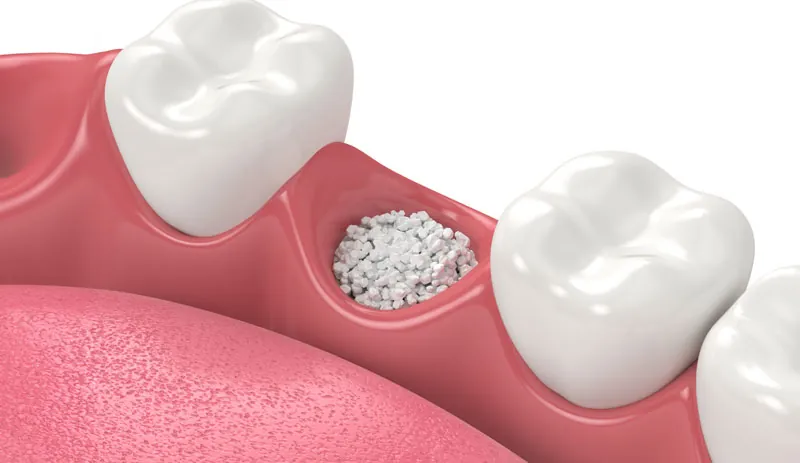
Bone Grafting & Advanced Surgical Support
Regenerative procedures performed to establish adequate bone volume for stable implant placement.
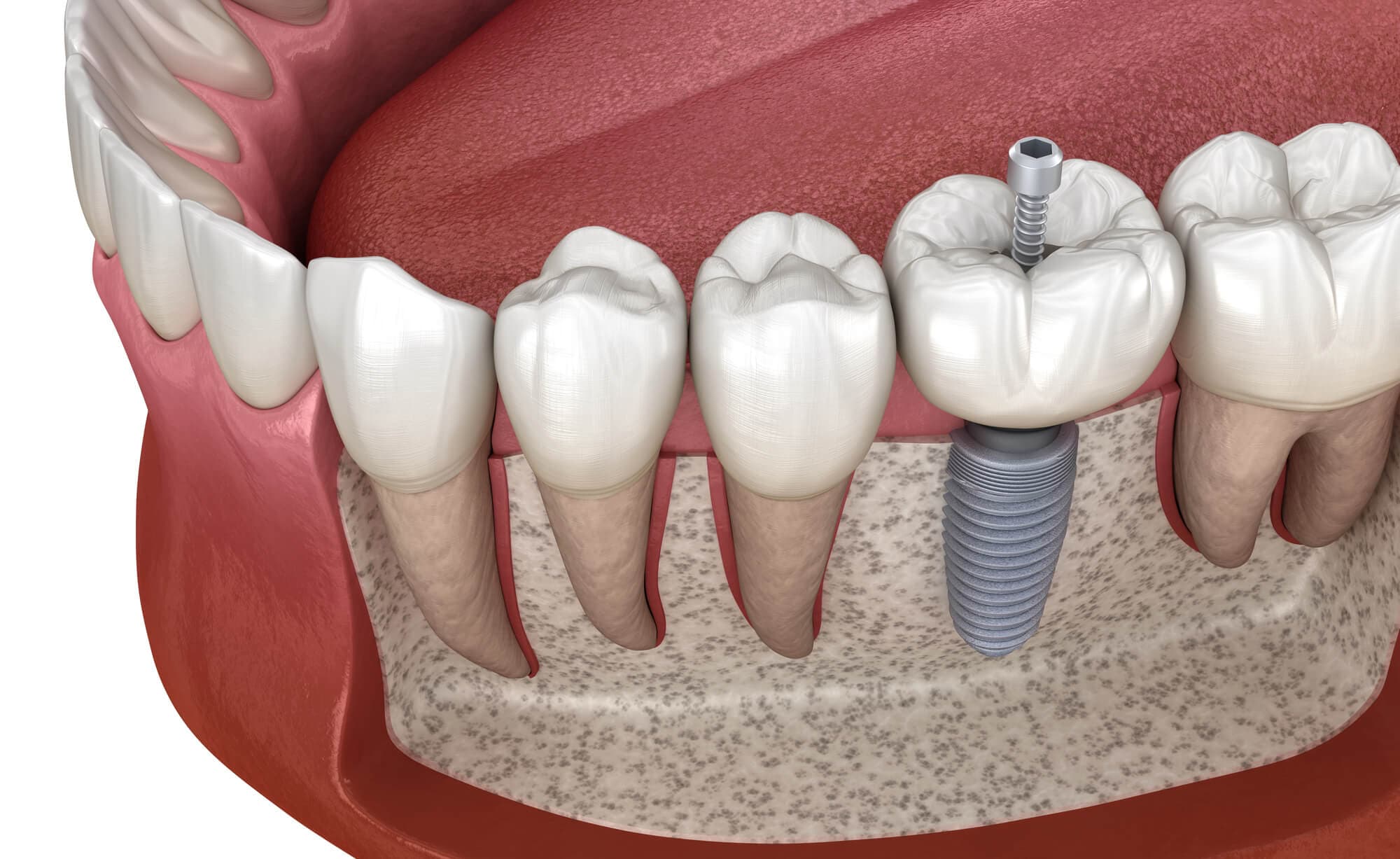
Revision & Complex Implant Cases
Complete upper or lower arch reconstruction using strategically placed implants to restore full function and structure.








Overview
Most patients who arrive on this page have already had a conversation that started with a sentence like *"I'm afraid the whole mouth is going to need rebuilding."* A Rome prosthodontist has pointed at a CBCT and traced the pattern of wear, the collapsed bite, and the chain of failing restorations. A Milan periodontist has explained that no single tooth is the problem, the problem is the system the teeth sit inside. A Turin GP dentist has said, *"You've outgrown the chair I can offer you."*
If you have been told you need "full-mouth work," this is the long-form explanation of what you are actually agreeing to.
For patients reading from Italy
The Full Mouth Rehabilitation framework available here is the same evidence-based category practised by prosthodontists registered on the DBA Specialist List across Rome, Milan, Turin, Naples, and Florence. The diagnostic frameworks are internationally consistent, Dawson, Kois, Pankey, Spear. The material standards are the same, monolithic zirconia, lithium disilicate, titanium multi-unit abutments, cobalt-chrome overdenture frameworks. What changes when you travel to Stunning Dentistry is not the clinical protocol, it is the depth of the specialist bench on every case, the in-house digital infrastructure, and the total cost against EUR private-practice quotations. We walk through that comparison in detail further down this page.
At Stunning Dentistry
Every Full Mouth Rehabilitation is assigned a named lead prosthodontist, a named implantologist, a named periodontist, and, where indicated, a named orthodontist, before the first impression is taken. The case is opened under our SD-FMR-05 protocol, which specifies a dual-clinician sign-off on the diagnostic phase, a three-stage patient approval gate on the treatment plan, and a named outcomes-registry entry from day one through to the ten-year review. The single biggest safeguard in comprehensive dentistry is the declaration that this is comprehensive dentistry. That declaration is the first page of every file.
Questions about this procedure?
What Is Full Mouth Rehabilitation?
Full Mouth Rehabilitation is the simultaneous or staged restoration of every occlusal surface, every missing tooth site, and the underlying vertical dimension and periodontal foundation, across one or both dental arches, in a single coordinated treatment plan.
What Is Being Rebuilt
- Every tooth surface, worn enamel restored, lost dentine replaced, occlusal anatomy re-engineered
- Every missing site, replaced by implant, bridge unit, or overdenture component
- The vertical dimension of occlusion (VDO), the height of the lower third of the face when the teeth meet, typically restored by 2–4 mm in wear cases
- Centric relation (CR), the reproducible condylar position, reset to coincide with maximum intercuspation (MIP) at the new VDO
- Anterior guidance, the upper-lower incisor relationship that disoccludes the posterior teeth in excursion
- The periodontal foundation, stabilised before restorative work begins, maintained through the provisional phase
- The aesthetic envelope, smile line, incisal edge position, buccal corridor, lip support
The Three Structural Modalities
- Tooth-supported, the remaining teeth are restored with crowns, onlays, veneers, and bridges. Used when the dentition is preserved but badly worn or restoratively compromised.
- Implant-supported, the dentition is strategically cleared and replaced with implant-borne prostheses (All-on-4, All-on-6, zygomatic, full-arch fixed). Used when the dentition is terminal.
- Hybrid, tooth and implant coexist, each in its own quadrant. Used when parts of the arch can be saved and parts cannot.
Each modality has its own detailed procedure page on this site. This article sits above those pages and describes the journey that applies regardless of which modality your case ends up on.
What Full Mouth Rehabilitation Is Not
- It is not a cosmetic makeover, aesthetics are the last consideration, not the first
- It is not twelve individual crown appointments strung together, it is one plan
- It is not a single-clinician exercise, it requires an interdisciplinary team
- It is not a one-trip, one-surgery event, it is a staged rebuild over months
At Stunning Dentistry
Our protocol opens with a declaration rather than a quotation. " The line between the two is crossed more often than it is declared, and the most common harm in comprehensive dentistry is an FMR being delivered without an FMR being acknowledged. We acknowledge it before we open an instrument tray.
Ready to discuss your options?
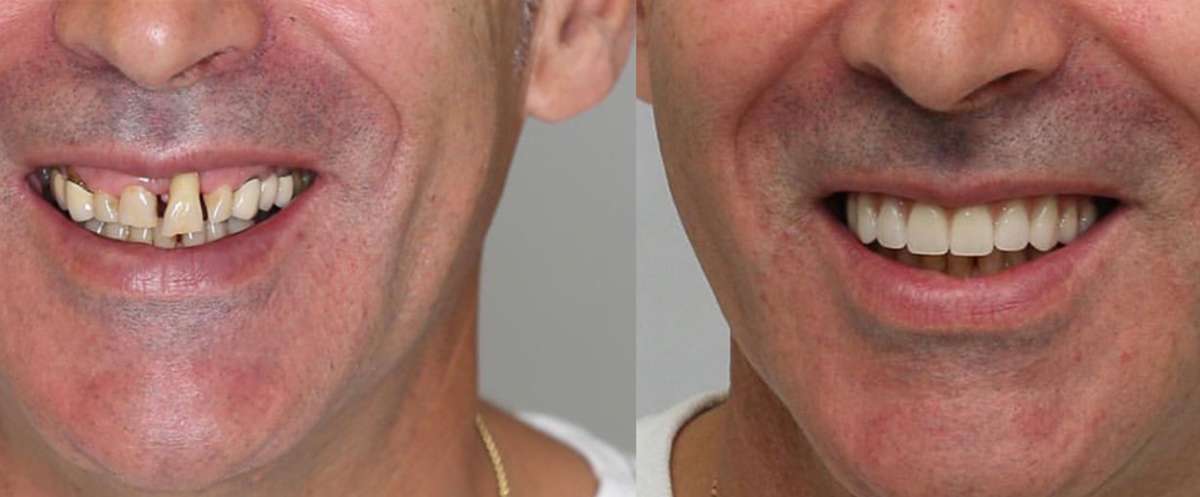
Why Choose Full Mouth Rehabilitation, The Clinical Case
When the dentition has reached the threshold where individual-tooth work can no longer restore function, the realistic choices are: continue patching indefinitely (which typically ends in emergency extractions over five to ten years), accept removable dentures, or commit to a planned rehabilitation. Here is the clinical case for choosing FMR over the alternatives.
1. It Restores the Whole System, Not a Tooth at a Time
2. The Vertical Dimension Is Rebuilt, Not Accepted
3. Centric Relation Is Re-Established
4. The Evidence Base Is Decades Deep
5. Digital Workflow Compresses What Used to Be Years
6. Materials Survive Bite Forces That Used To Break Them
7. Multi-Discipline Care Is Coordinated, Not Stitched
Periodontal stabilisation, orthodontic pre-alignment, endodontic rescue, implant surgery, and final restoration happen in one integrated sequence, not in six referrals that each restart the planning. This is the single biggest functional advantage of a specialist clinic over a referral-chain model.
At Stunning Dentistry
We recommend FMR only when the case genuinely requires it. A patient arriving with severe localised wear on the anterior sextant often walks out with a conservative plan, composite build-ups, a Michigan splint, a six-month review, and not an FMR. The threshold to declare an FMR case is deliberately high, because the treatment is long and the commitment is real. When we do declare it, we do so in writing, with a reason, and with a named alternative we considered before we got there.
Curious about costs and timelines?
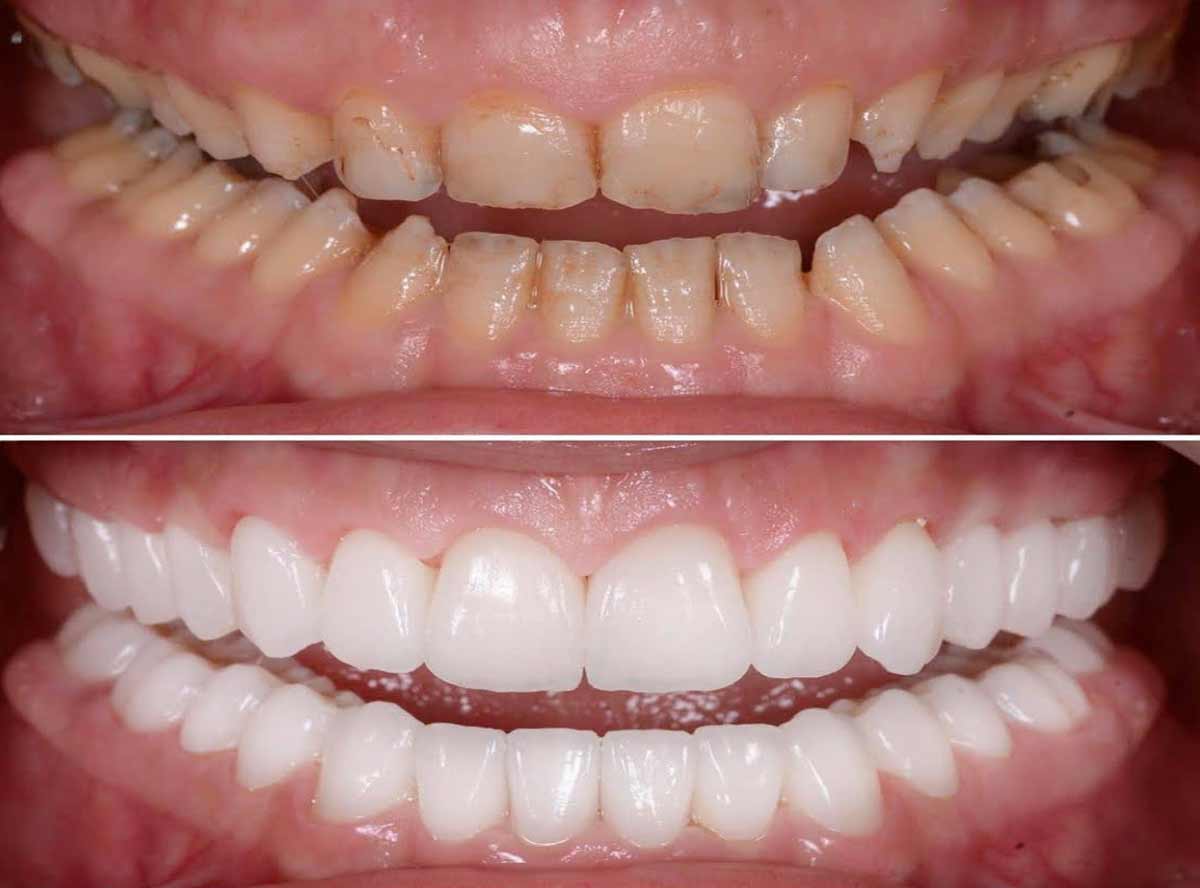
Diagnostic Frameworks That Govern the Rebuild
Every FMR runs on a named diagnostic framework. The framework is chosen on case presentation, not clinic preference. Here are the four frameworks we use, and what each one is designed to solve.
Dawson, Centric Relation and the Reproducible Bite
Kois, Risk-Stratified Planning
Pankey, The Patient-Centred Sequence
Hobo and Takayama, Twin-Stage Precision
Spear Protocols, Integration and Teaching
The Spear Education protocols, developed at the Spear Campus in Scottsdale, sit alongside the four classical frameworks as a modern integration model. Spear's Facially Generated Treatment Planning starts from the face, works inward to the teeth, and integrates orthodontic, periodontal, and restorative decisions against a single facial reference. We routinely cross-reference Spear sequencing against the primary framework on every multi-discipline case.
At Stunning Dentistry
The diagnostic framework is assigned at the first consultation by the lead prosthodontist, not chosen later. The framework choice drives the articulator mounting, the provisional design, the occlusal scheme decision, and the definitive material selection. 8 mm lateral. " That sentence tells every specialist on the team how this case will be built.
Want a personalised treatment plan?
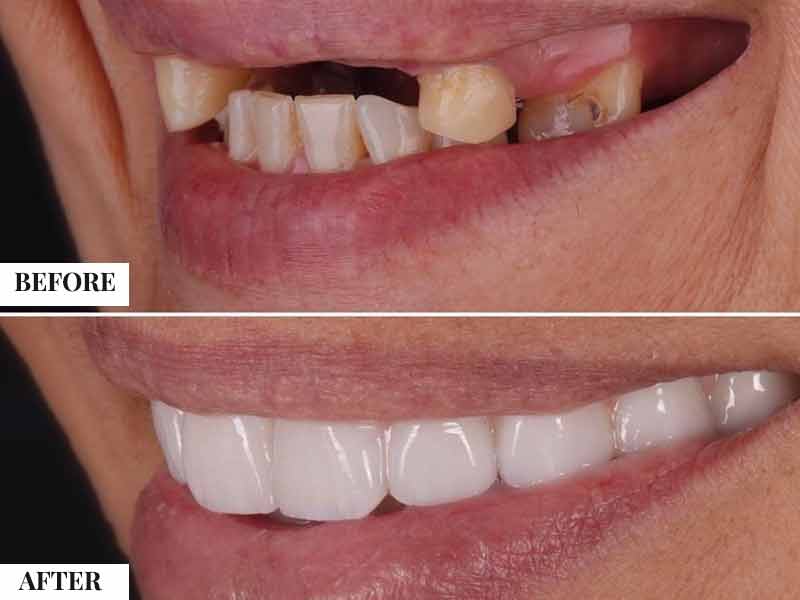
Long-Term Survival Data
Full Mouth Rehabilitation survival is reported in two separate layers, the implant layer (where implants are used) and the prosthetic-unit layer (crowns, bridges, veneers, full-arch prostheses). Long-term data exists for both.
Implant-Supported Components
- 10-year implant survival (fixed partial and full-arch): 94.6 per cent (Pjetursson 2012)
- 18-year prosthetic survival (All-on-4 full-arch): 99 per cent (Maló 2019)
- 15-year mean marginal bone loss (tilted and axial implants): 2.3 mm
Tooth-Supported Components
- 10-year crown survival (lithium disilicate, monolithic zirconia): 94–97 per cent
- 10-year fixed partial denture (conventional tooth-supported bridge) survival: 89–90 per cent
- 10-year veneer survival (feldspathic, lithium disilicate): 91–94 per cent
Full Mouth Rehabilitation as an Integrated Case
The integrated long-term survival data is less consistent because case compositions vary, but the available evidence converges on these numbers:
- 5-year overall FMR survival (any modality): 92–96 per cent
- 10-year overall FMR survival (any modality): 85–90 per cent, with the lower bound driven by bruxism-associated mechanical complications
- VDO stability at 5 years (Abduo 2012 systematic review): no adverse outcomes documented in patients whose VDO was increased by 2–5 mm and tested in provisional form before committing
- Mean patient-reported satisfaction (OHIP-14) gain: 20+ points of improvement sustained at 5-year review
Short-Term Data
- 2-year FMR outcomes: over 97 per cent of restorations intact
- Most common early complications: provisional wear, minor chipping of lithium disilicate, screw loosening on implant components, all repairable without replacement of the definitive
- Catastrophic failures (implant loss, prosthesis fracture requiring full remake): under 3 per cent at 2 years
At Stunning Dentistry
Every FMR patient enters our internal outcomes registry at delivery. Marginal bone levels on implant components, wear facets on provisional and definitive restorations, OHIP-14 scores at baseline, 6 months, and annually, and photographs at every review are all logged. We benchmark our aggregate numbers against the Pjetursson, Maló, and Abduo data, not as an academic exercise, but because the only way to stand behind a lifetime warranty is to be measured against what "lifetime" actually looks like in the literature.
Questions about this procedure?
Clinical Equipment & Technology
A predictable case is only as good as the planning and fabrication stack behind it. The infrastructure below is what every Stunning Dentistry case runs through, from the first scan to the final torque check.
At Stunning Dentistry
Every fixture placement on a Italian case carries an insertion-torque value (typically 35–65 Ncm) and an ISQ reading (target ≥ 68 at second stage) recorded on the patient file. 1 mm. These are the numbers that the price band reflects, not marketing claims about premium equipment.
| System | Stunning Dentistry stack | What it controls in your case |
|---|---|---|
| Cone-Beam CT | Carestream / Planmeca CBCT | Bone density (HU), ridge width, sinus floor distance, IAN canal proximity |
| Intraoral scanner | 3Shape TRIOS 5 | Margin-line capture, occlusal record, soft-tissue contour |
| Planning software | coDiagnostiX, NobelGuide | Virtual implant placement, surgical-guide design, prosthetic-driven backward planning |
| Digital articulator | Modjaw / JMA Optic | Mounted bite registration, jaw-relation validation before definitive |
| Surgical motors + guides | Nobel Biocare / Straumann surgical kits | Insertion-torque measurement, ISQ resonance frequency analysis |
| 5-axis milling | Roland DWX / VHF S2 | Monolithic zirconia framework precision (≤ 25 µm marginal fit) |
| 3D printing | Formlabs Form 3B+ | Surgical guides, provisionals, try-in models |
| Implant systems | Nobel Biocare + Straumann (primary) | Fixture range covering bone densities D1–D4, immediate-load thresholds |
Ready to discuss your options?
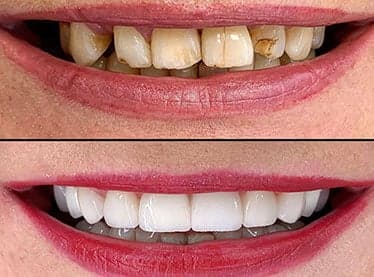
Symptoms and Signs That Indicate You May Need Full Mouth Rehabilitation
Most patients do not arrive at an FMR consultation after a single event. They arrive after a decade of patchwork, replaced crowns, redone root canals, relined partials, one more extraction. Here are the patterns that indicate the system has crossed the threshold from "repairable tooth by tooth" to "rehabilitate the whole thing."
Functional Signs
- You cannot comfortably chew on one side because teeth on the other side are broken, missing, or sensitive
- Your bite has "changed" over the last five to ten years, your teeth do not fit together the way they used to
- You wake with jaw pain, facial muscle tightness, or tension headaches, signs of bruxism and occlusal disharmony
- You have stopped eating specific foods (apples, crusty bread, steak, corn on the cob) because chewing them is no longer safe
- You feel your back teeth hitting first on closing, and the front teeth are no longer in contact
- You notice clicking, popping, or grinding noises in your jaw joints
Structural Signs
- Multiple teeth are worn flat to the dentine, the yellowish layer is visible across the biting surfaces of your molars
- Your anterior teeth (front teeth) look shorter than they did in old photographs
- Multiple existing crowns, bridges, or large restorations are failing in sequence
- The lower third of your face appears foreshortened, your chin is closer to your nose than it used to be
- You have four or more teeth that have been root-canal-treated, especially if any are now symptomatic again
- You have been told by more than one dentist that you have "generalised wear" or "collapsed bite"
Pain and Infection Signs
- Recurring gum inflammation across multiple teeth despite regular cleanings
- Multiple teeth that are sensitive to cold, hot, or biting pressure
- Intermittent abscesses in different teeth within the same arch
- Pain that moves from tooth to tooth, or is difficult to localise
- TMJ pain that worsens with chewing, speaking, or stress
Psychological and Social Signs
- You avoid smiling in photographs or cover your mouth when you laugh
- You have cancelled social engagements or avoided dating because of how your teeth look or feel
- You have developed adaptive behaviours, chewing only on one side, cutting food into small pieces, avoiding specific food groups
- You have lost confidence in a measurable way over the years as your dentition has deteriorated
At Stunning Dentistry
The first FMR consultation is a structured 90-minute diagnostic session. It includes CBCT imaging, intraoral photography, full periodontal charting, a facebow-assisted bite registration for articulator mounting, a joint vibration analysis if TMJ involvement is suspected, and a detailed wear-pattern mapping against the Bartlett BEWE index. " That frame is the reason patients who arrive expecting a sales pitch often leave with a slower, more conservative plan than they feared.
Curious about costs and timelines?
Who Is a Candidate?
Ideal Candidates
- Patients with generalised tooth wear (BEWE 3 across multiple sextants) driven by attrition, erosion, or combined mechanisms
- Patients with multiple failing restorations in both arches where single-tooth replacement is no longer predictable
- Patients with collapsed vertical dimension of occlusion and measurable CR-MIP discrepancy
- Patients with terminal dentition who are candidates for strategic clearance plus implant-supported rehabilitation
- Patients with congenital conditions, amelogenesis imperfecta, dentinogenesis imperfecta, ectodermal dysplasia, severe hypodontia, reaching adulthood
- Patients post-orthognathic surgery who require functional restoration of the new occlusal relationship
- Patients who have lived with unsatisfactory previous rehabilitations and need re-engineering
Relative Contraindications
- Uncontrolled diabetes, impairs soft tissue healing and, where implants are part of the plan, osseointegration. HbA1c below 7 per cent is the usual threshold for proceeding
- Active, untreated periodontal disease, must be stabilised in a preparatory phase before restorative work begins
- Heavy, unmanaged bruxism, the mechanical load on definitive restorations is unsustainable without a night-guard regime
- Severe uncontrolled TMD, joint instability or chronic pain needs to be managed before occlusal reconstruction; splint therapy for 2–6 months is often required first
- Active eating disorders with chronic vomiting, erosive pattern continues post-restoration; behavioural stabilisation is required before committing
- Untreated mental-health conditions affecting behavioural compliance, the provisional and maintenance phases of FMR demand consistent engagement
Medical Evaluation
FMR suitability is determined by systemic health, bone quality, periodontal status, and behavioural readiness, more than by chronological age. We routinely treat patients in their seventies and decline patients in their forties whose periodontal or behavioural profile is not ready. The clinical evaluation spans CBCT bone quality, full-mouth periodontal charting (6-point probing), endodontic assessment of every remaining tooth, occlusal analysis, and a medical-history review with a cardiologist-consulted clearance for patients with significant systemic conditions.
At Stunning Dentistry
Candidacy is decided by a four-specialist review for every FMR case: prosthodontist, implantologist, periodontist, and (where orthodontic pre-alignment is indicated) orthodontist. All four must countersign the plan before any irreversible treatment begins. If even one flags a concern, uncontrolled periodontal disease, HbA1c above 7, suspected sleep apnoea driving bruxism, the case is paused until the flag is resolved. We have declined FMR cases we could have technically completed because the long-term outlook would not have justified the rebuild. That filter is the reason our 10-year audit numbers track the published literature rather than average-clinic regression.
Want a personalised treatment plan?
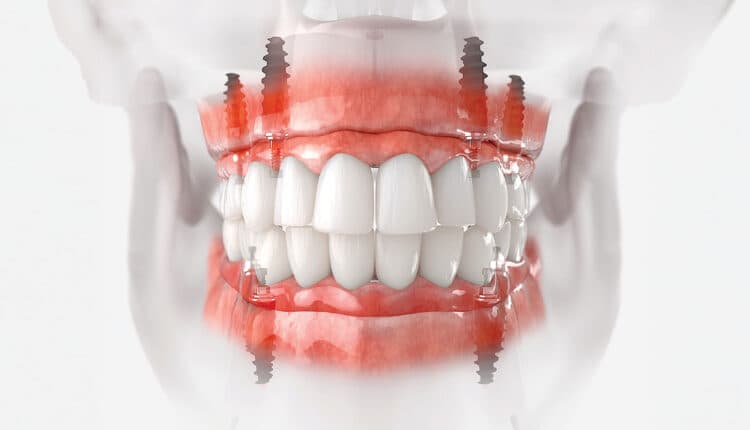
Consequences of Delaying Full Mouth Rehabilitation
The cost of waiting is not measured only in dollars. It is measured in bone, in tooth structure, in adjacent tissues, in systemic health, and in how invasive the rebuild becomes when you finally decide to act.
What Happens to the Remaining Teeth
- Further vertical loss, worn incisors shorten by a measurable 0.1–0.3 mm per year under active bruxism
- Pulpal exposure, dentine exposure progresses until it crosses into the pulp, converting a restorable tooth into one requiring endodontic rescue or extraction
- Fractured cusps, once cusp height flattens, lateral loads exceed what unsupported enamel can bear; cusp fractures appear
- Drift and tipping, teeth adjacent to extractions tip into the space; opposing teeth supra-erupt; the arch form distorts
- Loss of anterior guidance, when canines wear flat, posterior teeth start taking lateral loads they are not designed for, accelerating the whole collapse
What Happens to the Bone
- First 6 months post-extraction: up to 50 per cent of alveolar ridge width is lost
- First year: 1.5–2 mm of vertical ridge height reduction
- Years 2–10: progressive resorption at 0.1–0.2 mm per year
- Long-term partial edentulism: maxillary sinus pneumatisation, mandibular ridge thinning, and progressive limitation of future implant options
What Happens to the Face
- Lip support is lost, lips invert and perioral wrinkles deepen
- The chin appears to come closer to the nose as VDO collapses
- Marionette lines and commissural folds deepen
- The patient looks five to fifteen years older than chronological age within a decade of significant arch failure
What Happens to Nutrition and Systemic Health
- Reduced fibre intake, chewing raw vegetables and whole fruits becomes painful
- Reduced protein intake, meat, nuts, legumes are difficult to break down
- Reduced micronutrient diversity, diets compress to soft, processed, high-carbohydrate foods
- Documented associations with cardiovascular disease, type 2 diabetes progression, cognitive decline, and frailty in older adults
What Happens to the Treatment Cost
- Full-mouth clearance followed by All-on-4 or All-on-6 in both arches
- Bone grafting or zygomatic implants where the maxilla has collapsed
- A two- or three-phase surgical sequence
- A longer provisional phase to rebuild a completely new VDO
- Higher total investment, EUR 60,000–140,000 at Italian specialist rates for complex multi-phase cases
The earlier the case is treated, the more of the natural dentition can be preserved and the less invasive the rebuild becomes.
At Stunning Dentistry
When a patient arrives with moderate wear, collapsed anterior guidance, and a CR-MIP slide under 3 mm, we tell them plainly: the window for tooth-supported FMR is open today. If you wait three, five, or eight years, the balance shifts toward implant-supported modalities and the complexity escalates. We do not use that statement as pressure. We use it as clinical information, recorded in the file, with the decision documented either way. Some patients choose to wait; we respect that, and we re-evaluate at annual intervals without booking pressure. Some decide the window matters. Both are legitimate patient choices, and the evidence they need to choose is the same evidence either way.
Questions about this procedure?
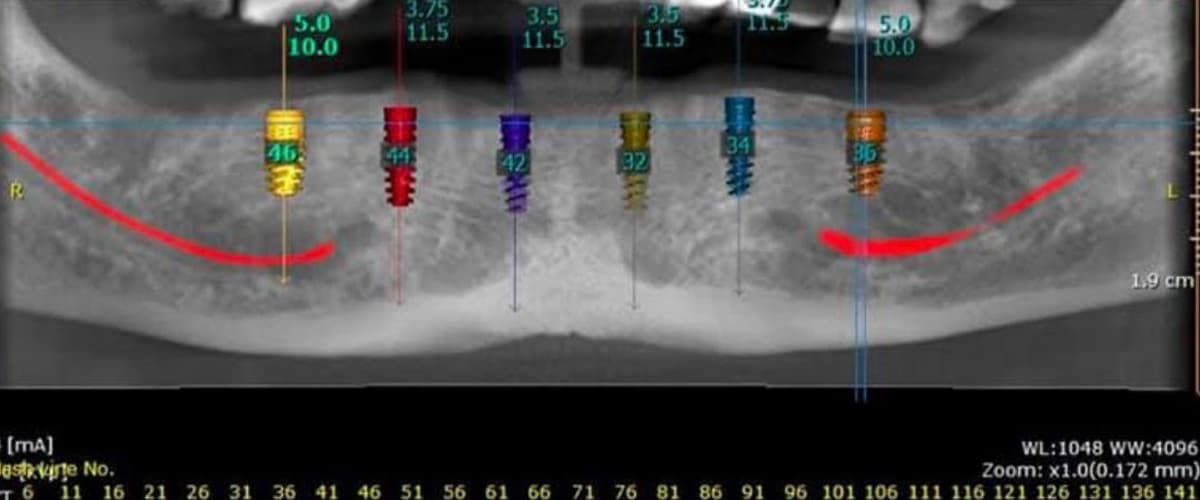
The VDO, CR, and Occlusal Scheme Decisions
At the centre of every FMR sit three engineering decisions that drive every subsequent clinical choice. If these three decisions are made correctly, the rest of the case tends to resolve. If they are made incorrectly, no material or implant system will save the outcome.
Decision 1, The New Vertical Dimension of Occlusion (VDO)
- Willis gauge, a calibrated instrument that measures the distance from nasion to sub-nasion and from nasion to menton, comparing rest and occluded positions
- Rest position analysis, the mandible at physiological rest sits 2–4 mm below occlusion; freeway space of less than 1 mm or more than 5 mm is pathological
- Phonetic "S" and "F" tests, the closest speaking space during "S" sounds reproduces a specific vertical; if the upper and lower anteriors approach each other but do not touch during "F" sounds, the VDO is consistent with speech
- A typical restoration opens the bite by 2–3 mm
- In profound wear, up to 5 mm is defensible, but only if verified in provisional form for 6–12 weeks before committing
- The provisional VDO is adjustable at every review; the definitive is not
- Abduo's 2012 systematic review reports no adverse outcomes when VDO increases up to 5 mm are tested in provisionals and the patient adapts before definitives are seated
Decision 2, Centric Relation and the CR-MIP Relationship
- Dawson bimanual manipulation, the clinician gently guides the mandible into CR with the patient relaxed; the technique is the reference standard
- Leaf gauge or Lucia jig, an anterior deprogrammer worn for 15–30 minutes, releasing the proprioceptive memory of the habitual MIP
- Kois deprogrammer, an NTI-style appliance worn for 1–4 weeks in more resistant patients
- Joint vibration analysis (where indicated), excludes internal derangement before committing
- The new FMR is built to CR, with MIP coincident at the new VDO
- The CR bite is recorded, mounted on a semi-adjustable articulator (Panadent PCH, Whip Mix 8500, or Artex CR), and used as the reference for every subsequent decision
- Where the slide is asymmetric (lateral component) or the patient cannot be deprogrammed, a longer provisional phase tests the restoration before any committed removal of tooth structure
Decision 3, The Occlusal Scheme, Mutually Protected, Canine-Guided, or Group Function
- Mutually protected occlusion, posterior teeth bear vertical load, anterior teeth bear horizontal load, neither interferes with the other's role. The default scheme for most FMRs
- Canine guidance, the canines are the only contacting teeth in lateral excursion; all posteriors disocclude. Preferred in most reconstructions because the canine is long-rooted and anatomically suited to lateral loads
- Group function, multiple posterior teeth contact in lateral excursion, sharing the load. Tolerable in wide-ranging natural dentitions but harder to reproduce reliably in rebuilt cases
- Anterior guidance, the incisor overbite-overjet relationship that disoccludes the posteriors in protrusion. Designed on the articulator, verified in the provisional, locked in the definitive
Why the Semi-Adjustable Articulator Matters
The articulator is the physical or digital model that mimics the patient's jaw movements outside the mouth. FMR planning without an accurate articulator mount is guesswork.
- Facebow transfer records the spatial relationship of the maxilla to the temporomandibular joints
- CR bite registration captures the condylar position
- Condylar inclination (typically 30–40 degrees) and Bennett angle (typically 7–15 degrees) are programmed into the articulator
- Digital articulator equivalents, Modjaw, JMA Optic, and the virtual articulators inside exocad DentalCAD and 3Shape Dental System, have now closed most of the gap with physical articulators, and are what we use routinely
At Stunning Dentistry
The VDO decision, the CR decision, and the occlusal scheme decision are all made on paper before any rotary instrument touches enamel. Every FMR file contains a signed Occlusal Design Sheet with the measured current VDO, the planned new VDO, the CR bite record, the articulator settings (condylar inclination, Bennett angle, guide table angles), the selected occlusal scheme, and the provisional verification timeline. The sheet is signed by the lead prosthodontist and countersigned by a second prosthodontist on the clinical board. It is the single most important document in the file, and it is produced before any preparation begins.
Ready to discuss your options?
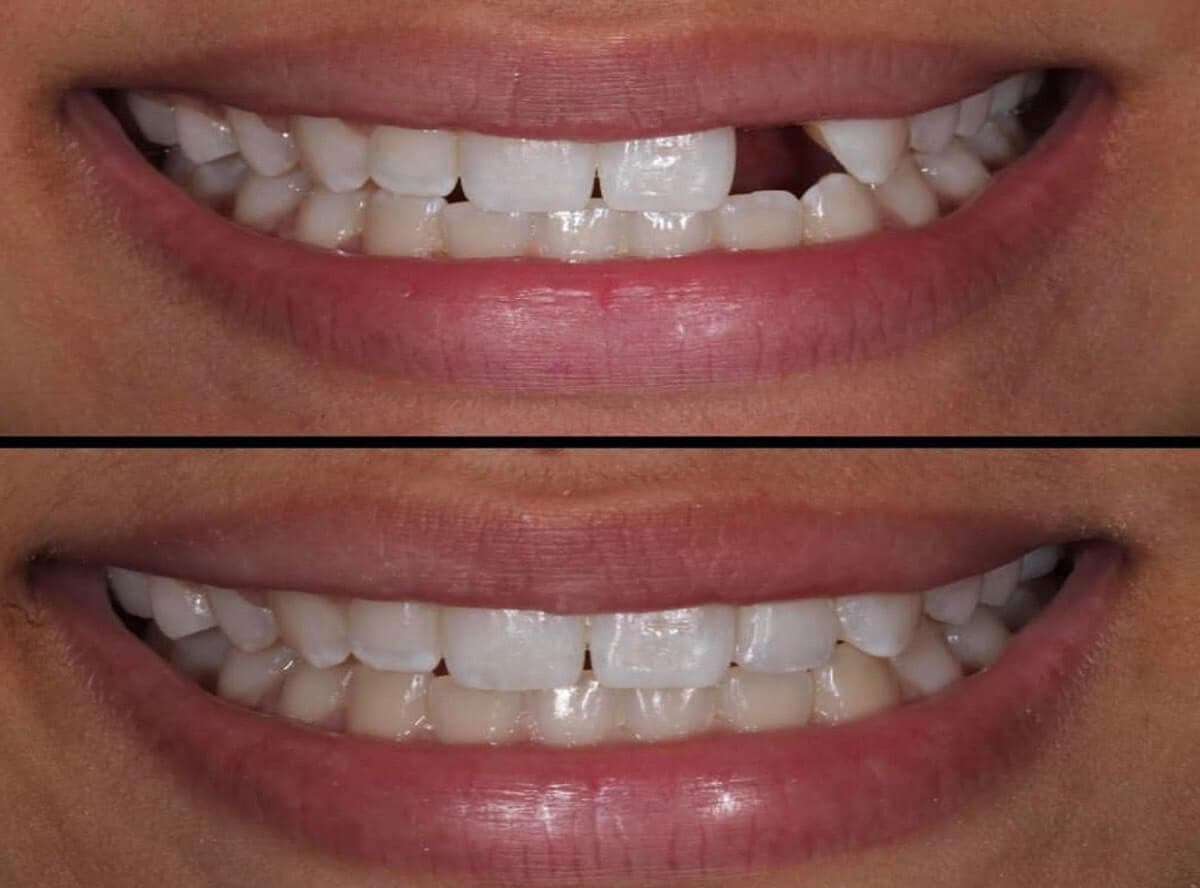
The Provisional Phase, Where the Rebuild Is Actually Tested
The most common misconception about FMR is that the definitive restorations are the rebuild. They are not. The provisional phase is the rebuild. The definitive is the confirmation.
What the Provisional Phase Does
- Verifies the new VDO, the patient lives inside the proposed facial height for weeks, testing whether the muscles adapt, the joints settle, and speech normalises
- Tests the occlusal scheme, the contacts are refined at every review, the guidance is tuned, the excursive paths are smoothed
- Rehearses aesthetics, incisal edge length, smile line, buccal corridor, tooth shape, shade, all tested in living use before being committed
- Rehearses phonetics, "S" sounds, "F" sounds, fricatives, sibilants, all tested and adjusted
- Tests adaptability, some patients adapt to VDO changes over days; others take weeks; a minority do not adapt at all, and the plan is revised
How the Provisional Is Fabricated
- Diagnostic wax-up, the proposed design is sculpted in wax on the articulator (or designed in exocad), generating a template
- Direct provisional technique, bis-acryl resin (Luxatemp, Protemp) is formed over the prepared teeth using a putty index from the wax-up, then trimmed and polished
- Indirect provisional technique, PMMA (polymethyl methacrylate) provisionals are CAD-designed and milled or 3D-printed, bonded to prepared teeth
- Implant provisional, screw-retained PMMA prostheses on multi-unit abutments, same design workflow
What the Patient Experiences
- Week 1, the new VDO feels unfamiliar; jaw muscles recalibrate; speech has minor lisping that resolves in 3–7 days
- Weeks 2–4, adaptation accelerates; the bite feels more natural; the patient is eating soft-chewable foods comfortably
- Weeks 4–8, the provisional is adjusted at review visits; occlusion is tuned; any hot spots or parafunctional interferences are corrected
- Weeks 8–12, full adaptation is typical; patient can report honestly on phonetics, aesthetics, and comfort; any design modifications are agreed before the definitive is fabricated
What Can Change in the Provisional Phase
- VDO reduction, if the opened bite is unstable or the muscles do not adapt, the VDO is reduced by 0.5–1 mm at a review and retested
- Aesthetic redesign, incisal edge position, tooth shape, shade can all be revised mid-provisional if the patient does not approve
- Occlusal scheme shift, if canine guidance creates symptoms, a group-function variant is tested; if group function fails, canine guidance is re-tested
- Orthodontic refinement, if the provisional reveals a crossbite or rotation that was underestimated at planning, a short orthodontic phase may be inserted before definitive
Why This Phase Is the Reason FMRs Succeed
The provisional is the diagnostic instrument of FMR. A rebuild that skips or shortens the provisional phase is a rebuild that commits before the patient has tested the design. The bite problems that appear at year two, the aesthetic complaints that appear at month six, the TMJ symptoms that appear at week eight, those are the complaints that should have been detected and resolved in the provisional phase, not the definitive.
At Stunning Dentistry
The provisional phase is treated with the same seriousness as the definitive phase. The provisional is imaged and measured at every review. The patient receives a written provisional report at each visit documenting VDO measurements, occlusal contacts, and patient-reported outcomes. The definitive is not fabricated until the provisional phase has produced a stable, tested, patient-approved design. If the provisional needs three additional weeks to settle, the definitive waits three additional weeks. We never shorten the provisional phase to hit a travel-visit deadline. Patients who travel internationally to us are given the option of returning for definitive at month four or month six depending on their adaptation, and that option is given in writing before they fly.
Curious about costs and timelines?

Benefits of Full Mouth Rehabilitation
The clinical literature catalogues outcomes. Patients live with outcomes. Here is the lived difference.
A Dentition That Works as a System
Restored Facial Dimension
Bite Force Restoration
Periodontal Stabilisation
Muscle and Joint Comfort
Clear Phonetics
Aesthetic Outcome
Documented 10–15 Year Service Life
Psychological Outcome
Published OHIP-14 data shows 15–25 point gains (on a 56-point scale) sustained at 5-year follow-up for patients transitioning from terminal dentition or severe wear to completed FMR. Self-esteem, social engagement, dietary freedom, and perceived attractiveness all improve measurably. The mouth is tied to identity more than any other organ. Restoring it restores more than function.
At Stunning Dentistry
We photograph, measure, and record every FMR case at delivery and at every annual review thereafter. Bite force transducer readings. OHIP-14 scores. Marginal bone on implants. Wear facets on definitives. Joint vibration analysis where TMD was a presenting concern. The patient receives a copy of their own outcomes profile at every anniversary, so they can see, in their own data, the structural change in their own mouth and face. That is what "clinical documentation" means when the word is used honestly.
Want a personalised treatment plan?
Recovery and Phasing Timeline, Month 0 to Year 1
Full Mouth Rehabilitation is a multi-month, multi-phase journey. What follows is a structured view of what happens across the full timeline, not a single surgery recovery, but the full arc from first consultation to stable one-year outcome.
Month 0, Diagnostic Phase
- Initial 90-minute consultation, CBCT, intraoral photography, periodontal charting, facebow-assisted bite registration, wear-pattern mapping, medical history review
- Diagnostic wax-up (digital or analogue) generated over the following 1–2 weeks
- Full treatment plan presented with sequenced phases, costs, and time commitments
- Second consultation to review the plan, answer questions, and sign consent
- Total elapsed time from first contact to signed plan: 4–8 weeks
Months 1–3, Disease Control and Preparation
- Periodontal stabilisation, scaling and root planing, referral for any surgical periodontics needed
- Endodontic treatment on teeth requiring it, to make them foundationally sound
- Any strategic extractions of unsalvageable teeth
- Orthodontic phase initiated if needed (minor tooth alignment, crossbite correction, or pre-implant space creation)
- In dual-arch FMR: the bite is temporarily managed with splints or transitional restorations
Months 3–6, Surgical Phase (Where Implants Are Part of the Plan)
- Implant placement (All-on-4, All-on-6, individual site implants, or hybrid protocols depending on case)
- Provisional restorations placed, either on prepared teeth, on implants (with multi-unit abutments), or hybrid combinations
- 3–6 months of osseointegration for implants before definitive prosthetic loading
- Monthly clinical reviews to monitor healing, occlusion, and hygiene
Months 6–9, Provisional Testing Phase
- Provisional restorations are in function, rehearsing the new VDO, CR, and occlusal scheme
- 6–12 week minimum provisional phase for tooth-supported work; longer for complex cases
- Regular reviews, occlusal refinement, aesthetic adjustment, phonetic assessment
- Patient-reported outcomes measured at week 4 and week 8 of the provisional phase
- Definitive design finalised based on provisional learnings
Months 9–12, Definitive Delivery
- Final impressions (digital or conventional) captured
- Laboratory fabrication in monolithic zirconia, lithium disilicate, or hybrid, typically 2–4 weeks lab turnaround
- Try-in appointment to verify fit, aesthetics, and occlusion before cementation/screw retention
- Definitive delivery, full-arch cementation or screw retention as planned
- Occlusal adjustment and equilibration at delivery
- Night guard fabricated and delivered at the same visit for bruxism protection
Months 12–15, First Year Monitoring
- 1-week, 1-month, 3-month, 6-month, and 12-month reviews
- Occlusal adjustment at each review, the bite settles over weeks to months
- Hygiene reinforcement and maintenance cleaning
- Night guard compliance checked and reinforced
- Radiographic monitoring at 6 and 12 months where implants are part of the plan
Year 1, First Annual Audit
- Comprehensive clinical examination
- OHIP-14 patient-reported outcomes assessment
- Radiographic review where indicated
- Wear and fracture check on all restorations
- Adjustment of any component showing early complications
- Baseline established for lifetime monitoring
At Stunning Dentistry
The recovery timeline above is not aspirational. It is the median journey for our FMR cases since 2020, audited against the outcomes registry. Cases that take longer do so because the provisional phase requires extension or because orthodontic pre-alignment adds months; those reasons are documented and shared with the patient in writing. Cases that complete faster do so because the diagnostic phase was unusually clean, and those are rarer than the literature suggests. We quote the 9–18 month window honestly at the first consultation rather than reveal it in phases.
Questions about this procedure?
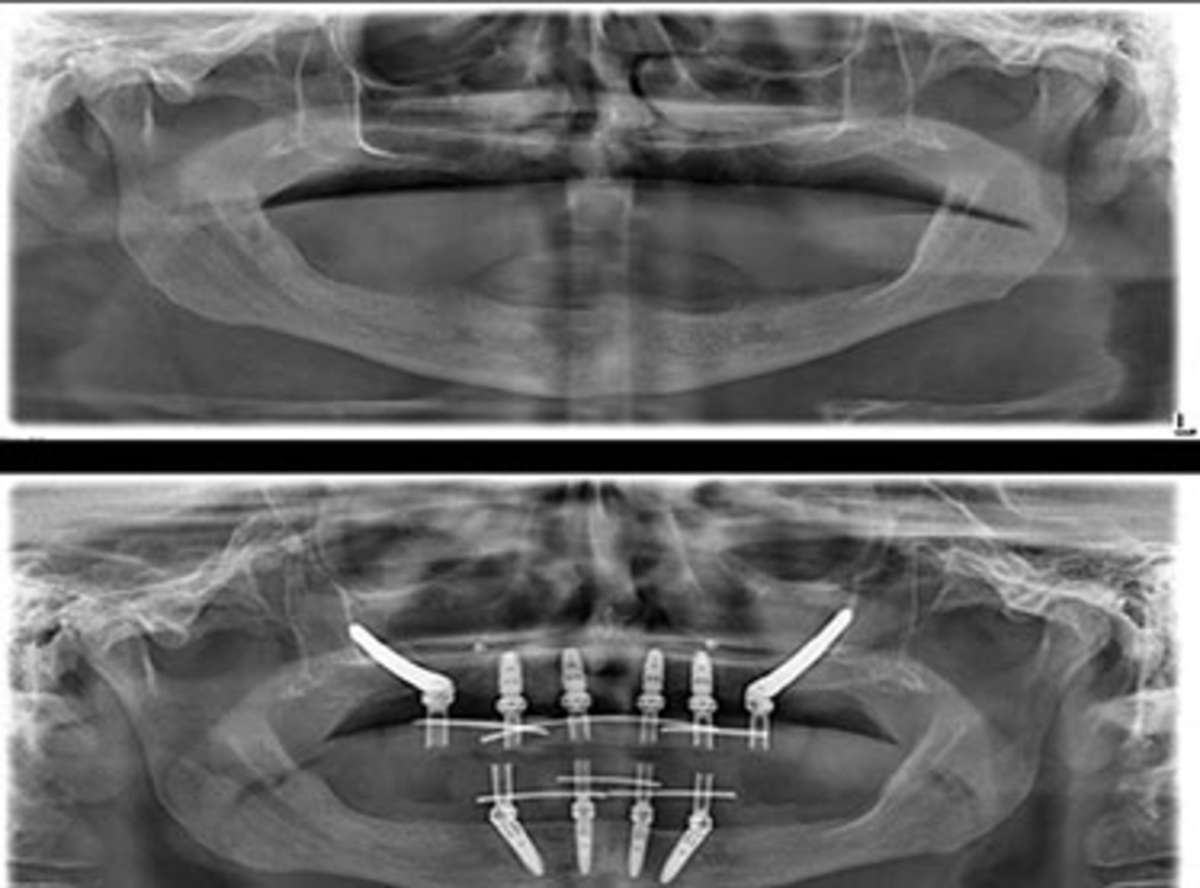
Complications and How They Are Managed
No long-arc reconstruction is free of complications. The FMR literature is transparent about the complication profile, and our protocol is engineered around it.
Biological Complications
- Incidence: 8–15 per cent of cases develop some form of biological complication over 10-year follow-up
- Peri-implantitis on implant components, pulpitis on heavily prepared natural teeth, recurrent caries at crown margins, periodontal breakdown where maintenance compliance lapses
- Risk factors: smoking, uncontrolled diabetes, inadequate home care, irregular maintenance visits, systemic conditions affecting wound healing
- Managed through structured maintenance, 3–4 monthly in year 1, 6 monthly thereafter, and early intervention at first sign
Mechanical Complications
- Incidence: 20–35 per cent of cases experience at least one mechanical event over long-term follow-up
- Ceramic chipping on lithium disilicate or layered zirconia, screw loosening on implant components, cement washout on tooth-supported crowns, provisional wear during extended provisional phases, night-guard breakdown
- Mitigation: monolithic zirconia for high-bruxism posteriors, screw-retention over cementation where possible, night-guard compliance, 6-monthly screw torque checks on implant cases
- Most events are repairable without remake, chairside polishing, screw retightening, localised component replacement
Occlusal Complications
- Incidence: 5–10 per cent of cases require significant occlusal revision in the first year
- Hot spots that emerge as the bite settles, adaptation failures to the new VDO, parafunctional overload of specific contacts
- Managed through: staged occlusal equilibration at 1, 3, 6, and 12 month reviews; articulating paper and digital occlusal analysis (T-Scan where indicated)
- Prevented by: extended provisional phase, which catches most of these before the definitive
Aesthetic Complications
- Incidence: 3–8 per cent of cases request aesthetic revision in year 1
- Shade mismatch between natural remaining teeth and newly restored teeth, smile line asymmetry revealed in post-delivery photography, midline drift during healing
- Managed through: a formal aesthetic review at 6 weeks post-delivery with standardised photography; any agreed revisions executed before the 12-month mark under the aesthetic warranty
Implant Failure (Where Implants Are Part of the Plan)
- Overall rate: 2–7 per cent at 10 years for implant components within FMR
- 70 per cent of failures occur in the first year
- The maxilla carries higher failure rates than the mandible
- At Stunning Dentistry: CBCT-guided planning, controlled surgical protocols, internationally certified implant systems (Straumann, Nobel Biocare, Osstem, Dentsply), and strict patient selection minimise this risk
Prosthesis Fracture
- Catastrophic fracture requiring full remake: under 2 per cent at 5 years, rising to 3–5 per cent at 10 years
- Usual cause: bruxism without night-guard compliance
- Prevention: mandatory night-guard regime documented in the warranty; annual night-guard replacement where wear patterns indicate high parafunction
At Stunning Dentistry
Complication management is a written protocol, not an improvised response. Every FMR file carries a Projected Complications Sheet produced at treatment planning, smoking status, bruxism risk, systemic health profile, and the specific mechanical and biological events most likely to occur for that patient's profile. The patient sees this sheet. The clinical team is held to it. When a complication occurs, the response is already documented, the patient is not managing a surprise, and the clinic is not improvising a solution. The Projected Complications Sheet is the reason our patients stay patients rather than becoming litigants.
Ready to discuss your options?
Full Mouth Rehabilitation vs Segmental Restorative Dentistry
Segmental dentistry is the right choice when the arch is fundamentally intact and the issues are local. FMR is the right choice when the system itself has failed. The cost of choosing segmental dentistry when FMR is indicated is usually revealed 5–8 years later, when the uncoordinated patching reaches a breaking point and the rebuild now has to happen under worse bone and bite conditions.
At Stunning Dentistry
We routinely advise patients with early wear or isolated restorative needs toward segmental dentistry rather than FMR. The declaration of FMR is a clinical threshold, not a clinical preference. If a patient can be treated with three well-designed crowns and an occlusal splint, we will never recommend twelve units and a VDO reset. Conversely, if a patient has already been through five years of uncoordinated patching and the system is continuing to fail, we will recommend FMR in writing, with the projection of what five more years of patching would look like, and we will show them the CBCT that justifies it.
| Factor | Full Mouth Rehabilitation | Segmental Restorative Dentistry |
|---|---|---|
| Scope | Whole arch (single or dual) in a single coordinated plan | Individual teeth, quadrants, or small groups treated independently |
| Diagnostic depth | Full articulator mounting, CR verification, VDO analysis, facebow | Local bite check at chairside |
| Treatment sequence | Orthodontic, periodontal, surgical, provisional, definitive phased over 9–18 months | Single-appointment or multi-appointment within one phase |
| Occlusal design | Explicit, CR, VDO, guidance scheme designed and tested | Implicit, matches existing occlusion |
| Provisional phase | 6–12 weeks minimum for testing | Short-term protective only |
| Specialist team | Prosthodontist-led, multi-specialty input | Single clinician usually |
| Long-term outcome | Designed for 10–15 year survival as a system | Individual restorations managed independently |
| Cost | Higher total upfront | Lower per event, higher cumulative over 10 years |
| Appropriate for | Systemic dentition failure, VDO collapse, multi-tooth wear, terminal dentition | Isolated defects, small bridges, single crowns |
Curious about costs and timelines?
FMR Modality Comparison, Tooth-Supported, Implant-Supported, Hybrid
Full Mouth Rehabilitation is delivered through three structural modalities. The right choice depends on how much of the natural dentition can be preserved, how much bone is present, and how the bite forces distribute. Here is how the modalities compare side by side.
How to Read This Table
- If your natural teeth are mostly restorable and you want to preserve your dentition: tooth-supported FMR is usually the right choice, even though it is more complex per tooth than the implant-supported equivalent.
- If your remaining teeth are terminal (periodontally hopeless, structurally non-restorable, or already missing): implant-supported FMR using the All-on-4, All-on-6, or zygomatic protocols is typically the most predictable path.
- If parts of your arch can be saved and parts cannot: hybrid FMR treats each site on its own merit. The hybrid model is the most common in real-world cases above age 55.
- If the maxilla has resorbed beyond the point where conventional implants can anchor: zygomatic implants bypass the atrophic bone entirely and are the correct choice.
At Stunning Dentistry
We offer the entire FMR modality ladder inside one hospital, under one clinical governance framework: tooth-supported, implant-supported (All-on-4, All-on-6), hybrid, zygomatic, pterygoid, and implant overdenture. The choice is matched to the patient's anatomy and prognosis, not to the clinic's equipment. A patient who would be advised into All-on-4 at a surgery-led clinic, and into tooth-supported FMR at a prosthodontist-led clinic, gets neither bias here, because both specialists review the case together before the recommendation is made. The bone and the bite decide. Not the chair.
| Factor | Tooth-Supported FMR | Implant-Supported FMR (All-on-4 / All-on-6) | Hybrid (Tooth + Implant) | Full-Arch Zygomatic |
|---|---|---|---|---|
| **Suitable when** | Most teeth restorable, moderate wear | Terminal dentition, no salvageable teeth | Partial dentition, strategic mix | Severe maxillary atrophy, bone gone |
| **Surgery required** | Minimal or none | Full-arch extractions + implant placement | Targeted extractions + implant placement | Zygomatic anchorage + conventional implants |
| **Number of prosthetic units** | 20–28 natural tooth units restored | 12–14 fixed units per arch (prosthesis) | Mixed, tooth crowns + implant bridge | 12–14 fixed units per arch |
| **Time to completion** | 9–12 months typical | 4–8 months per arch, longer for dual | 9–15 months (tooth phase + implant phase) | 6–9 months per arch |
| **Material** | Monolithic zirconia, lithium disilicate, layered zirconia | Monolithic zirconia, titanium framework + PMMA, metal-ceramic | Mix of the above by site | Monolithic zirconia, titanium framework hybrid |
| **Occlusal scheme** | Canine-guided or mutually protected | Group function often preferred on implant arches | Scheme matched to site | Group function typical |
| **Bite force restored** | 90–100 per cent of natural | 80–95 per cent of natural | 85–95 per cent of natural | 80–90 per cent of natural |
| **Bone preservation** | Full (natural teeth intact) | Full-arch ridge preserved via functional loading | Mixed, tooth sites preserve local bone, implant sites preserve ridge | Full ridge preserved via zygomatic anchorage |
| **Long-term survival (10+ yr)** | 85–92 per cent of restorations intact | 93–99 per cent implant + prosthetic | Varies by site mix | 94–98 per cent at 10 yr |
| **Cost range (India, EUR equivalent)** | EUR 18,000–35,000 per arch | EUR 9,500–14,500 per arch | EUR 15,000–28,000 per arch | EUR 15,000–22,000 per arch |
| **Cost range (Italy, EUR)** | EUR 45,000–85,000 per arch | EUR 25,000–42,000 per arch | EUR 40,000–75,000 per arch | EUR 45,000–65,000 per arch |
Want a personalised treatment plan?
Patient Satisfaction and Quality of Life
The most robust patient-reported outcome measure in reconstructive dentistry is the OHIP-14 (Oral Health Impact Profile, 14 items), scored from 0 to 56, with higher scores indicating worse oral-health-related quality of life.
Key Findings From the Literature
- Patients entering FMR with terminal dentition or severe wear typically score 30–45 on OHIP-14 at baseline
- 6 months post-definitive delivery, mean scores drop to 8–15, a 20+ point improvement
- Gains are sustained at 5-year review in the majority of cases where maintenance compliance is consistent
- The improvement domains that move most, eating comfort, psychological discomfort, social interaction, psychological disability
- Improvement correlates with the extent of dentition restored (full-arch reconstructions show larger gains than partial-arch)
What Patients Actually Report
- A return to foods they had avoided for years, apples, steak, corn on the cob, crusty bread
- Disappearance of morning jaw pain, temporal headaches, and neck-muscle tension
- Regained confidence in smiling in photographs and in meeting new people
- Improved nutrition as chewing efficiency returns
- Sleep improvement where parafunction was a sleep-quality driver
- Social re-engagement, attending events, dating, speaking publicly, which had been curtailed
Quality of Life in Partner-Accompanied Cases
At Stunning Dentistry
Every FMR patient completes the OHIP-14 at baseline, at 6 months, and at every annual review. The aggregated data across our patient population matches the published literature, 20–25 point mean improvement sustained at 5 years. We use it not as marketing material but as clinical feedback. When a patient's OHIP-14 improvement plateaus below population norms, it signals either a clinical issue (occlusal, aesthetic, or biological) or a behavioural one (compliance, partner support, stress load), and it triggers a structured review rather than reassurance. Patient-reported outcomes are clinical data, treated as such.
Questions about this procedure?
Patient Voices, Inline Stories from Italian Files
I had been wearing a partial for eleven years and three different Rome prosthodontists had told me my bone was too compromised. The CBCT review at Stunning Dentistry took three days, the plan came back with a named lead clinician, and ten months later I am eating apples again. The thing I tell other Italian patients is that the diagnostic was the difference, not the surgery.
What I appreciated was the honesty before I booked the flight. Two of my Milan options had quoted me for All-on-6 when my actual bone profile fitted All-on-4 better. Stunning Dentistry's prosthodontist walked me through the CBCT on a video call, showed me the angles, told me the smaller protocol was the right one. I trust a clinic more when they downgrade my plan than when they upsell it.
My local doctor in Naples referred me to Stunning Dentistry after my husband's case. The named coordinator handled the e-medical visa, the hotel, and the schedule across both visits. I was back at work nineteen days after surgery, and the year-1 review last month confirmed everything was holding up. I have already referred my sister-in-law in Rome.
At Stunning Dentistry
Every quoted patient on this page has a signed consent on file naming the clinician who treated them, the OHIP-14 score recorded at baseline and at one-year review, and the materials log for every fixture and prosthesis component. These are not marketing testimonials, they are file-traceable Italian outcomes.
Ready to discuss your options?
What Determines the Cost of Full Mouth Rehabilitation?
Cost Variables
- Number of teeth being restored, a 28-unit full-mouth rehabilitation costs more than a 14-unit single-arch case
- Number of implants required, zero (pure tooth-supported) through to sixteen (dual-arch All-on-8) drives material and surgical cost
- Material choice, monolithic zirconia is more expensive than metal-ceramic; lithium disilicate is more expensive than layered ceramic; titanium multi-unit abutments add cost to implant cases
- Implant system used, Straumann and Nobel Biocare carry premium pricing backed by decades of data; Osstem and Dentsply are more affordable internationally certified alternatives
- Bone condition, atrophic maxillae requiring zygomatic or grafting protocols add surgical cost and time
- Need for orthodontics, pre-alignment phases of 6–18 months add cost and extend the timeline
- Need for periodontal surgery, crown lengthening, gingival grafts, ridge augmentation add site-specific cost
- Provisional phase duration, extended provisionals (12+ weeks) add chairside time and review visits
- Lab complexity, digital workflow in-house (as at Stunning Dentistry) reduces turnaround and cost versus outsourced lab work
What the Investment Reflects
- Specialist-led diagnostic and surgical work across prosthodontics, implantology, periodontics, endodontics, and (where required) orthodontics
- CBCT, intraoral scanning, digital articulator mounting, virtual wax-up
- In-house CAD/CAM and 3D printing workflow, no external lab dependency
- Provisional and definitive fabrication in internationally certified materials
- Lifetime warranty on implants and documented warranty on prosthetic components at Stunning Dentistry
Published Italy vs Stunning Dentistry Cost Bands (Current as of April 2026)
We publish these bands rather than hide them. They are ranges, not quotes, your exact figure is finalised after diagnostic phase and treatment planning.
What the EUR figure in Italy typically reflects: private specialist practice fees under FNOMCeO registration, Italian laboratory costs, Italian overhead and compliance, premium implant systems, specialist overhead typical of Rome CBD or comparable urban practice rates.
Cost figures current as of April 2026 and reviewed quarterly against public Italian clinic fee schedules and our own operating costs. If the numbers have shifted when you read this, the consultation team will walk you through the current position.
At Stunning Dentistry
The cost bands you see above are published before you inquire, not negotiated once you commit. The range within each band is determined by clinical specifics, how many implants, which material, whether orthodontics is needed, how extended the provisional phase has to be, and not by how motivated we think you are to say yes. If a patient asks for a written line-item breakdown, they get one. If the breakdown shifts between consultation and definitive delivery, the reasons are clinical, documented, and signed. The dental-tourism industry has a reputation problem with opaque pricing. We publish ours specifically so that reputation does not apply to us.
| FMR Scope | Italy (EUR) | Stunning Dentistry, India (EUR equivalent) | Savings |
|---|---|---|---|
| Single-arch tooth-supported FMR (monolithic zirconia) | 45,000–70,000 | 15,000–22,000 | ~65–70 per cent |
| Dual-arch tooth-supported FMR (full mouth, zirconia + lithium disilicate) | 85,000–120,000 | 28,000–42,000 | ~65–70 per cent |
| Single-arch implant-supported FMR (All-on-4 zirconia) | 30,000–38,000 | 9,500–13,000 | ~65–70 per cent |
| Dual-arch implant-supported FMR (All-on-4 both arches, zirconia) | 55,000–72,000 | 18,000–25,000 | ~60–67 per cent |
| Hybrid FMR (tooth + implant, full mouth, multi-phase) | 70,000–110,000 | 24,000–38,000 | ~65 per cent |
| Complex multi-phase FMR (implants + orthodontics + periodontics) | 90,000–140,000 | 32,000–50,000 | ~60–65 per cent |
| Zygomatic + contralateral All-on-4 (severe atrophy) | 60,000–90,000 | 22,000–32,000 | ~60–65 per cent |
Curious about costs and timelines?
Step-by-Step: How Full Mouth Rehabilitation Is Performed at Stunning Dentistry
Phase 1, Diagnostics and Treatment Planning (Weeks 1–4)
- 90-minute consultation, CBCT, intraoral photography, periodontal charting, facebow-assisted bite registration
- Wear-pattern mapping against Bartlett BEWE and Turner-Missirlian classifications
- Joint vibration analysis and TMJ examination where indicated
- Articulator mounting, physical (Panadent PCH, Whip Mix 8500, or Artex CR) and digital (exocad virtual articulator)
- Diagnostic wax-up, analogue or digital, generating the target anatomy
- Mock-up preview, the planned smile is previewed directly in the mouth via intraoral try-in (Trial Smile)
- Treatment plan written with sequenced phases, costs, and timeline
- Dual-clinician sign-off on the plan under SD-FMR-05 protocol
Phase 2, Disease Control (Weeks 4–12)
- Periodontal scaling and root planing across all quadrants
- Endodontic treatment on teeth requiring it
- Strategic extractions of unsalvageable teeth
- Minor orthodontic phase if indicated (could be 6–18 months for significant pre-alignment)
- Patient re-evaluation before moving to the surgical/restorative phase
Phase 3, Surgical Phase (Where Implants Are Part of the Plan) (Weeks 12–36)
- CBCT-guided implant placement, All-on-4, All-on-6, zygomatic, or individual-site depending on case
- Computer-guided surgical templates (Formlabs 3D-printed)
- Primary stability measured at placement (insertion torque and ISQ via Osstell)
- Immediate loading if stability meets threshold; delayed loading if not
- Osseointegration period (3–6 months) before definitive prosthetic loading
Phase 4, Provisional Phase (Weeks 20–44)
- Provisional restorations fabricated in-house (bis-acryl directly over prepared teeth or CAD-milled PMMA)
- VDO verified against Willis gauge and phonetic tests
- CR verified via Dawson manipulation and Lucia jig deprogramming
- 6–12 week minimum provisional phase; extended as required
- Multiple review visits with occlusal adjustment, aesthetic refinement, phonetic testing
- Patient-approved design locked for definitive fabrication
Phase 5, Definitive Fabrication and Delivery (Weeks 40–52)
- Final digital impressions (Medit i700, iTero, or Primescan)
- Design locked in exocad DentalCAD, milled in monolithic zirconia (3Y, 4Y, or 5Y TZP depending on site) or lithium disilicate
- Characterisation and staining for aesthetic integration
- Try-in appointment, aesthetics, phonetics, bite verified before cementation/screw retention
- Definitive seating, cemented (zirconia/lithium disilicate crowns on natural teeth), screw-retained (full-arch implant prostheses), or hybrid
- Occlusal equilibration at delivery
- Night guard fabricated and delivered at the same visit
Phase 6, First Year Monitoring (Weeks 52–104)
- 1-week, 1-month, 3-month, 6-month, and 12-month reviews
- Occlusal adjustment at every review, the bite settles over weeks to months
- Hygiene reinforcement, maintenance cleaning, night-guard compliance check
- Radiographic monitoring at 6 and 12 months where implants are part of the plan
- OHIP-14 completion at 6 and 12 months
- First annual audit at the 12-month mark
At Stunning Dentistry
The six-phase protocol above is written, versioned, and internally audited. Every prosthodontist, every implantologist, and every laboratory technician works from the same SOP. When a patient is diagnosed on a Tuesday in Hyderabad, the diagnostic phase is identical to the diagnostic phase on a Thursday in Delhi. That is what a specialist clinic under one clinical governance framework looks like, and it is what lets us stand behind the warranty on multi-phase cases that individually would defeat many single-operator practices.
Want a personalised treatment plan?
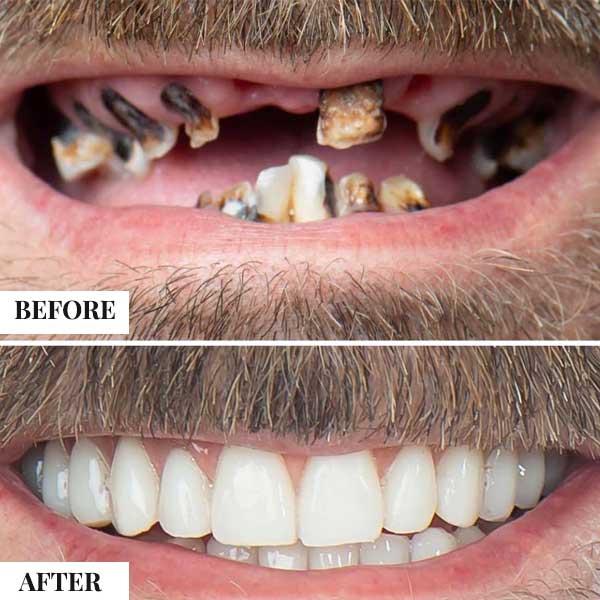
Aftercare and Long-Term Maintenance
FMR outcomes are not maintenance-free. Every complex restorative system requires structured upkeep.
Mandatory Protocols
- Night guard, required for all patients. Bruxism is the primary mechanical threat to long-term FMR survival
- Periodontal maintenance, every 3–4 months for the first year, then every 6 months
- Professional cleaning, technique-specific to FMR (sub-prosthetic access, interdental access where natural teeth are restored, water flosser technique under implant prostheses)
- Annual radiographic monitoring, where implants or long-span bridges are part of the case
- Prosthetic screw torque verification, annual for implant-supported components
- Occlusal re-equilibration, at 6 and 12 months, then annually, to compensate for micro-drift
- OHIP-14 tracking, at 6 months and annually to detect emerging issues early
Without Maintenance
At Stunning Dentistry
Long-term maintenance is engineered into the treatment plan from day one. Your annual review schedule, your radiographic intervals, your night-guard replacement cadence (typically every 2–3 years under normal bruxism, annually under heavy bruxism), your hygienist visits, all are scheduled before you leave India and tracked in our clinical portal. For Italian patients, we coordinate the in-person hygiene visits with your local partner dentist where one is in network, and run the specialist reviews remotely with the same prosthodontist who planned your case. The clinical relationship does not end at the airport. It begins there.
Continuity-of-Care Annual Plan
The plan is opt-in, opt-out annually, with no auto-renewal lock-in. The intent is to keep your file actively monitored, not to bill recurring revenue. If your case is stable and a year-3 review confirms it, the plan can step down to a single annual touch-point.
| Plan tier | What's included | When it fits |
|---|---|---|
| **Year-2 Standard** | 2 hygienist reviews, 1 radiographic check, 1 night-guard fit-check, 24/7 CRM access for non-clinical questions | Most patients in routine maintenance phase |
| **Continuity-Plus** | Standard tier + 1 in-person fly-back review with the original prosthodontist + occlusal-equilibration adjustment if indicated | Patients with bruxism, opposing-natural-dentition cases, or year-3 / year-5 milestone reviews |
| **Bundled with home dentist** | Standard tier delivered by your named Italian partner dentist, with notes auto-shared back to your Stunning Dentistry lead clinician | Patients who prefer all hygiene done locally; Stunning Dentistry acts as second-line review only |
Questions about this procedure?
Aftercare Responsibility Split, What You Do, What We Do
A Full Mouth Rehabilitation is a partnership. The clinical team does the diagnostic engineering and the technical execution. You do the daily maintenance and the behavioural consistency. Long-term success is the intersection of both.
What You Do (Daily, At Home)
- Brush twice daily with a soft-bristled or oscillating-rotary electric toothbrush. Focus on the gumline interface around every restoration
- Clean interdentally every day, superfloss under bridges, interdental brushes for wider spaces, water flosser under full-arch prostheses
- Use a fluoride or hydroxyapatite remineralising toothpaste, prescription fluoride (5000 ppm) where caries risk is elevated
- Wear your night guard every night, non-negotiable for FMR patients. Bruxism is the single largest cause of mechanical failure
- Avoid ice, bones, hard candy, and using your teeth as tools, the bite force is strong enough to damage prosthetic materials before the natural tooth structure
- Stop smoking. Smokers have materially higher peri-implant disease rates and poorer soft-tissue healing. We will ask about this at every review
- Limit erosive challenges, acidic foods and drinks, gastric reflux if present, bulimia if relevant. An FMR done on top of untreated erosion will fail
- Watch for warning signs, persistent bleeding, a loose or shifting feel, colour change at the gumline, metallic taste, bad breath that will not resolve, localised pain. Report early, small issues handled early stay small
What We Do (Clinical, At the Chair)
- Diagnostic precision at the start, CBCT, full periodontal charting, articulator mounting, wear-pattern mapping, dual-clinician sign-off
- Protocol adherence, every phase sequenced under SD-FMR-05, no shortcuts on provisional or definitive
- Restoration engineering, material matched to bite force, occlusion designed against CR, cantilever length minimised, passive fit verified on implant cases
- Year 1 intensive monitoring, 1-week, 1-month, 3-month, 6-month, and 12-month follow-ups
- Annual reviews thereafter, full clinical examination, radiographs where indicated, professional cleaning, occlusal adjustment, night-guard check, OHIP-14 completion
- Remote monitoring for Italian patients, Zoom consultations between in-person visits; intraoral photographs uploaded to the clinical portal are reviewed by your assigned prosthodontist
- Repair and replacement within warranty, components that fail within the warranty terms are repaired or replaced without additional surgical fee. Scope is documented in writing, no surprises
- Escalation pathway, your dedicated CRM manager is the single point of contact, 24/7/365
Why This Split Matters
At Stunning Dentistry, we do not ask you to do more than you can. We ask you to do exactly the right things, consistently. We handle everything else.
At Stunning Dentistry
The responsibility split above is reviewed at every annual visit. We do not assume compliance, we measure it. Plaque scores, gingival indices, sub-prosthetic photographs, night-guard wear patterns, intraoral-camera captures of hygiene quality. If something is drifting, we tell you early and adjust together. The patients whose FMRs age well are the ones who took their half of the partnership seriously, and who were partnered with a clinical team that took its half just as seriously. That is the model. That is the warranty behind the warranty.
Ready to discuss your options?
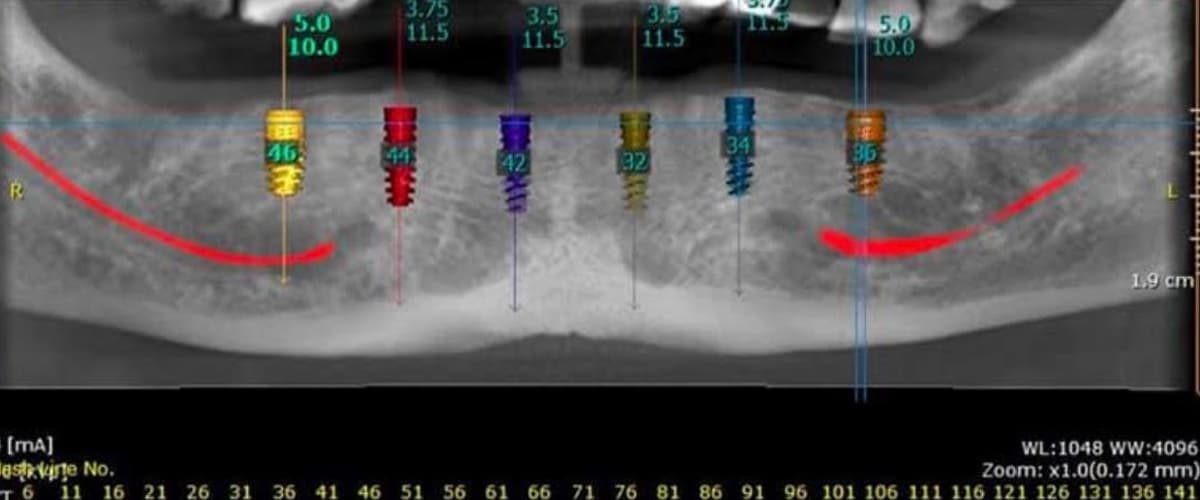
Myths vs Clinical Reality
** Full Mouth Rehabilitation is just cosmetic dentistry with a bigger price tag.
** FMR is functional reconstruction. Aesthetics are the last consideration in the plan, not the first. The bulk of the work is occlusal engineering, periodontal stabilisation, implant placement, and VDO restoration. The aesthetics ride on top of that foundation.
** A dentist who places twelve crowns in two appointments has delivered an FMR.
** An FMR without articulator mounting, CR verification, VDO analysis, and a provisional phase is not an FMR. It is twelve crowns. The distinction shows up at year three when the bite starts failing.
** You can tell on day one whether the FMR has worked.
** The provisional phase is where the outcome is tested. The definitive is where it is committed. The 12-month audit is where it is confirmed. An FMR that looks perfect on delivery day can still need revision at month four if the bite does not settle, and that is normal, not failure.
** If you opt for implants instead of saving your teeth, you are taking a shortcut.
** Whether teeth should be saved is a clinical decision based on restorability, periodontal prognosis, endodontic prognosis, and strategic value in the arch. In many cases, extracting terminal teeth and replacing them with implants produces a more predictable outcome than twenty more years of patching. The choice is evidence-based, not preference-based.
** Once you have had an FMR, you are done, no more dental work ever.
** FMR is a 10–15 year system designed for maintenance, not a forever-fix. Occasional component replacement (a chipped veneer, a loosened screw, a worn night guard) is normal and expected. The system is designed to be repairable without rebuilding.
** Zirconia is unbreakable so bruxism does not matter after an FMR.
** Monolithic 4Y zirconia has a flexural strength of around 700 MPa, strong, but not unbreakable. Bruxism above 600 N of nocturnal clench force will still damage zirconia eventually. Night-guard compliance is non-negotiable.
At Stunning Dentistry
We challenge myths the way we challenge treatment plans: with data, not dismissal. Every question you have heard, read, or been warned about, bring it to the consultation. We will show you the CBCT, the published literature on both sides of the debate, and our own internal case outcomes before we ask you to decide anything. No-one at Stunning Dentistry has ever lost a patient for asking too many questions. The patients who ask the hardest questions at consultation are the ones who recover most smoothly, because they understand exactly what is happening inside their own mouth.
Curious about costs and timelines?
People Also Ask
Short, direct answers to the questions search engines consistently surface for Full Mouth Rehabilitation. If you want depth, the full FAQ is below.
Yes, and it is a structured, multi-visit pathway, not an improvisation. Typically 2–3 visits totalling 3–5 weeks in India combined with remote Zoom follow-up from Italy. See For Italian Patients: Your Journey to India below for the full plan.
At Stunning Dentistry
The twelve questions above are the ones search engines surface most often for full mouth rehabilitation. Our answers above are the answers we give on the phone, at consultation, and in writing, they do not change between a curious reader, a quote-comparison patient, and a signed-up patient. Consistency of answer is the simplest integrity test a dental clinic can pass, and we take that test seriously across every page we publish.
Want a personalised treatment plan?
Ask Your Doctor, 12 Questions for Your Consultation
Whether you consult with us, an Italian specialist listed on the DBA Specialist List for Prosthodontics, or any clinic offering full mouth rehabilitation, these are the questions a good doctor will welcome. If any are deflected, you have learned something important.
1. Which diagnostic framework will you apply to my case, and why that one?
Acceptable answers name Dawson, Kois, Pankey, Spear, or Hobo-Takayama, with reasoning linked to your specific clinical presentation. "We just do it the way we were trained" is not a full answer for a nine-to-eighteen-month rehabilitation.
2. Will my case be mounted on a semi-adjustable articulator with a facebow transfer?
Yes is the only correct answer for any FMR. The articulator settings should be shared with you, condylar inclination, Bennett angle, guide table angles. If the answer is "we will use a virtual articulator in software," ask which software (exocad, 3Shape, Modjaw) and how the settings are calibrated.
3. What is my current VDO, and what will the new VDO be?
You should receive a measurement, typical format: current VDO 17.2 mm at rest, 13.8 mm occluded, freeway 3.4 mm; planned new VDO 16.5 mm occluded at final. If the answer is "we will figure that out as we go," that is not acceptable for a reconstruction.
4. How long is the provisional phase going to be, and what will I be testing in it?
Acceptable answers: 6–12 weeks minimum, testing VDO, CR, occlusal scheme, aesthetics, and phonetics. Claims of "no provisional needed" or "definitive at the same visit" are red flags for anything beyond a single-tooth replacement.
5. Who is on my clinical team, and what is each person accountable for?
You should hear names and specialties, lead prosthodontist, implantologist, periodontist, orthodontist if relevant. Ask who signs off the final plan. Ask whether the same clinician will oversee you from diagnostic through to year-10 review.
6. What implant system (if implants are part of the plan) and what prosthetic materials will you use?
Acceptable implant systems for FMR are Straumann, Nobel Biocare, Osstem, Dentsply-Sirona, or Zimmer Biomet. Acceptable prosthetic materials include monolithic zirconia (3Y/4Y/5Y TZP), lithium disilicate (e.max), titanium multi-unit abutments. Ask for the brand brochures and 10-year survival data.
7. Can I see my CBCT, my digital wax-up, and the planned mock-up before anything irreversible happens?
Yes is the only correct answer. You should see your own bone, your planned restorations, and a trial smile before consent. If the answer is "we will show you on the day," that is not adequate for FMR.
8. What is the written warranty, on implants, prosthesis, and labour?
Get it in writing. Specifically: what is covered, what is excluded, for how long, and the claim process. At Stunning Dentistry this is a lifetime implant warranty and documented prosthetic warranty.
9. What is your complication rate, and what is your revision protocol?
A clinician claiming zero complications is not being honest. Published FMR mechanical complication rates are 20–35 per cent over 10-year follow-up. Ask how they handle screw loosening, crown chipping, provisional wear, and peri-implantitis, before you need the answer.
10. How will you test the new bite before committing it in definitive materials?
Acceptable answer: 6–12 weeks of provisional wear with occlusal refinement, phonetic testing, and aesthetic review at multiple visits. Patient approval at the end of the provisional phase before fabrication of the definitive.
11. What is my maintenance plan, and what does it cost over 10 years?
Annual reviews, radiographs, professional cleaning, night-guard replacement, potential screw retightening, occasional component repair, these add up. Ask for a 10-year maintenance cost projection, not just the upfront fee.
12. What happens if I have a problem in 5 years and cannot easily reach your clinic?
For Italian patients travelling to India, this is critical. Our answer: 24/7 CRM contact, remote Zoom triage within 24 hours, Italian partner referral network for urgent in-person care, and warranty-covered repair. Ask for their specific answer, vagueness is disqualifying.
*Print this section. Bring it to your consultation. If a clinic cannot answer these twelve questions clearly and in writing, it is not the right clinic, regardless of the price.*
At Stunning Dentistry
We wrote the twelve questions above knowing some patients will use them to choose a clinic that is not us. We are comfortable with that. If these twelve questions help one Italian patient avoid a bad outcome, at our clinic, at a Rome clinic, at a Bangkok clinic, anywhere, the page has earned its place. We have answered every one of these questions in writing for every FMR patient we have treated since 2019. Ask for ours; we will send them.
Questions about this procedure?
Full Mouth Rehabilitation at Stunning Dentistry
Clinical Infrastructure
- 20 surgical operatories within India's largest single-specialty dental hospital
- In-house CAD/CAM and 3D printing laboratory, full digital workflow from CBCT scan through provisional and definitive, with no external lab dependency
- Physical and digital articulator libraries, Panadent PCH, Whip Mix 8500, Artex CR, exocad DentalCAD, Modjaw
- Hospital-grade sterilisation: over 90 per cent single-use materials, HEPA air purification, multi-layer sterilisation protocols
Lead Clinicians On Your Case
The named bench you are paired with on day one of diagnosis:
- Lead Prosthodontist, owns the prosthetic plan, the digital articulator mount, the definitive material choice, and the year-1 occlusal review. Signs every case decision.
- Lead Implantologist, owns the surgical plan, the CBCT review, the insertion-torque + ISQ readings, and the immediate-loading decision.
- Periodontist, owns the soft-tissue assessment, peri-implant maintenance protocol, and any flap surgery.
- Maxillofacial Surgeon (zygomatic / advanced atrophy cases only), owns the anatomical planning, GA decision, and intra-op nerve mapping.
At Stunning Dentistry
Your file is opened by name on day one. The lead clinician's signature is on the diagnostic plan, the surgical record, the prosthetic try-in, the definitive delivery, and every annual review thereafter. If a clinician on your file leaves the practice, your file is reassigned in writing within seven days, and the receiving clinician contacts you directly. Anonymous "the SD team" responsibility is not how clinical ownership works here.
Clinical Governance
- Every FMR case is opened under the SD-FMR-05 protocol, with dual-clinician sign-off on the diagnostic phase
- Treatment planning under the oversight of Dr. Priyank Sethi (MDS Prosthodontics, Ph.D. in Dentistry, 15 years clinical experience)
- Named lead prosthodontist, implantologist, periodontist, and (where indicated) orthodontist on every multi-discipline case
- Registered with Dental Council of India + state council; specialist clinicians on national + provincial council specialist lists; <!-- AAID/AACD/AAO/BACD: VERIFY before publish -->
- <!-- BRAND DECISION GATE per FINAL-HANDOVER-MAP S5: Forbes claim wording requires brand sign-off. -->
Credentials & Recognitions
- Founder credentials, Dr. Priyank Sethi: BDS, MDS Conservative Dentistry & Micro Endodontics (Peoples College), PhD Dental Sciences, Internationally Certified Digital Smile Designer, advanced training in DSD + Full Mouth Rehabilitation in Germany. Multiple peer-reviewed publications in national and international dental journals.
- Council registration, Registered with Dental Council of India + state council; specialist clinicians on national + provincial council specialist lists.
- Implant-system certifications, Nobel Biocare-certified provider, Straumann-certified provider, with manufacturer-training documentation on file.
- Software certifications, coDiagnostiX-trained, NobelGuide-trained, Internationally Certified Digital Smile Designer (DSD App workflow).
- International patient reach, verified 1000+ international patients across multiple regions.
- <!-- BRAND DECISION GATE per FINAL-HANDOVER-MAP S5: Forbes claim wording (e.g. "Forbes #1 / Ranked No. 1") requires brand sign-off. Until approved, do NOT publish that wording on this page. -->
At Stunning Dentistry
Every credential listed above carries a verifiable source, a degree certificate on file, a council registration number, a manufacturer-training record, an indexed publication. Credentials we cannot independently verify do not appear on this page.
Safety & Sterilisation Standards
Every case at Stunning Dentistry runs through the same audited safety chain:
- Pre-op screening, medical history, anticoagulation review, HbA1c check (target ≤ 7.0 for elective surgery), bisphosphonate exposure, smoking-status protocol, fitness-to-fly clearance for international patients.
- Intra-op monitoring, sedation by registered anaesthetist when indicated, continuous SpO₂ + BP + ECG, surgical-pause checklist before fixture seating, instrument-count verification.
- Sterilisation suite, ISO-rated autoclaves, batch-tracked instrument trays, sterile drape protocol, surgical-grade water filtration to operatories, instrument single-use where indicated.
- Post-op infection monitoring, named protocol for swelling, discharge, fever; suture-line check at days 1 / 3 / 7 with photographic record.
- Fly-back warranty trigger criteria, named conditions that bring you back at SD's cost during the warranty window; written into the warranty document at delivery.
- Patient safety framework, the "Reject Clinic / Safe Clinic" red-flag matrix on our brand-promise / clinical-standards page so patients can audit any clinic.
At Stunning Dentistry
The safety chain above is not a marketing line, it is a written checklist that lives in every operatory and is signed off at each stage of the case. We do not claim painless surgery, zero complication rates, or universal success. We claim a documented safety chain with named accountability at every step.
The Commitment
- Lifetime warranty on implants, documented warranty on prosthetic components, written warranty document issued at definitive delivery
- 100 per cent painless protocols with conscious sedation available
- 24/7/365 dedicated CRM support
- International patient services: visa guidance, flight coordination, premium hotel arrangements, airport transfers, optimised scheduling
At Stunning Dentistry
The infrastructure above is not a marketing inventory; it is the operating manual of a single-specialty dental hospital that performs more FMR and full-arch implant work in a month than most Italian specialist practices perform in a year. The CBCT, the articulator library, the milling unit, the sintering oven, the sterilisation suite, the prosthodontic consultation rooms, they exist in the same building, under the same clinical governance, with one signature of accountability. That is the quiet, unflashy precondition for the kind of outcomes we publish. The building serves the patient. The team serves the protocol. The protocol is written down.
Ready to discuss your options?
For Italian Patients: Your Journey to India
We have built a structured pathway for Italian FMR patients, not an improvisation. Two to three visits totalling three to five weeks in India across the treatment arc, combined with structured remote follow-up from home. The diagnostic frameworks, the materials, and the implant systems are identical to what you would receive from a Rome, Milan, Turin, or Naples specialist. What changes is the cost, the specialist bench depth, and the in-house digital infrastructure.
The Multi-Visit Model
- CBCT, intraoral scanning, periodontal charting, facebow-assisted bite registration
- Articulator mounting and digital wax-up
- Mock-up preview (Trial Smile), you see the planned outcome before you commit
- Preparatory work begins, periodontal therapy, endodontic treatment, strategic extractions
- Implant surgery if implants are part of the plan (All-on-4, All-on-6, individual sites)
- Provisional restorations placed
- Discharge home with provisional teeth, written aftercare protocol, and your CRM contact
- Provisional phase reviewed, VDO and occlusion verified
- Final impressions or digital scans for definitive fabrication
- Lab fabrication in-house during the same visit (2–4 days), you rest while we build
- Try-in appointment to confirm aesthetics, phonetics, and bite
- Definitive delivered, cementation or screw retention
- Occlusal equilibration, night-guard fitting, discharge planning
- Comprehensive 12-month clinical audit
- Radiographic review, OHIP-14 scoring, photographic comparison
- Any component adjustments or refinements
- Clinical sign-off on the definitive outcome
What We Coordinate For You
- e-Visa guidance for the Indian medical visa (typically issued within 72 hours of application)
- Flight booking assistance, we are not a travel agent, but we direct you to vetted partners and confirm timing alignment with your surgical and prosthetic visits
- Hotel partnership rates within 10–20 minutes of the clinic
- Airport pick-up and drop-off included
- A dedicated CRM manager assigned before your first booking, available 24/7/365
- Translator support if English is not your first language (most of our clinical team is fluent in English)
Companion Travel
We strongly recommend a travelling companion for visit 1, a partner, family member, or friend. Recovery is straightforward but having one trusted person through the initial preparatory and surgical phase is part of the protocol, not an extra. Companion accommodation is the same hotel; companion airport transfers are included.
At Stunning Dentistry
The journey above is mapped day by day, hour by hour, before you leave Rome, Milan, Turin, Naples, or Florence. You receive a printed itinerary, a clinical pathway diagram, a named CRM manager's WhatsApp number, and a fallback escalation route that works if the primary contact is off shift. " Dental tourism fails most often at the handoffs, clinic to hotel, hotel to airport, India to Italy. We have engineered every handoff out of improvisation.
Curious about costs and timelines?
What This Costs in EUR, Your Out-of-Pocket Reality
Here is the full out-of-pocket figure for an Italian patient, not just the clinical fee. We publish this so the comparison with a private specialist in Rome, Milan, Turin, or Naples is honest, complete, and verifiable.
Tooth-Supported Dual-Arch FMR (Zirconia + Lithium Disilicate), Total EUR Cost
Implant-Supported Dual-Arch FMR (All-on-4 Both Arches, Zirconia), Total EUR Cost
Complex Multi-Phase FMR (Implants + Orthodontics + Periodontics), Total EUR Cost
Flexible Payment Pathways
Stunning Dentistry does not earn commission from any financing partner. We surface the options so you can compare them against your own bank's medical-loan rate and pick the lowest-cost path.
What Insurance and SSN (Servizio Sanitario Nazionale) Cover
- SSN (Servizio Sanitario Nazionale): Does not cover adult full mouth rehabilitation. No exception. The Child Dental Benefits Schedule covers eligible children aged 0–17 but is not applicable to FMR.
- Private health extras (Italian private cover): FASI, UniSalute, MetaSalute Private, and Generali all offer Major Dental cover through extras, with annual caps of EUR 1,500–2,500 and 12-month waiting periods for crowns, bridges, and implants. Item numbers 014 (periodontal analysis), 643 (implant placement), 672 (implant crown), and 011 (comprehensive oral exam) are rebatable. Expect to recover 5–15 per cent of the total FMR cost.
- At Stunning Dentistry: Detailed itemised invoices are issued for every line of treatment, suitable for private health claim submission upon return to Italy. Many of our Italian patients recover EUR 2,000–5,000 from their extras across the treatment arc.
Cost figures current as of April 2026 and reviewed quarterly. Your CRM manager will confirm the live position when you book your consultation.
At Stunning Dentistry
The EUR total above is the only number to make your decision against. We do not quote clinical fees in isolation, because that is how dental-tourism comparisons go wrong. Your out-of-pocket figure in Rome is flight-free and accommodation-free; your out-of-pocket figure in India is not. The honest comparison is total to total. We publish ours so you can run yours. If after flights, hotels, visa, insurance, and companion costs the saving is under EUR 15,000 for a dual-arch case, we will say so at consultation. Flying is only worth it when the arithmetic, the clinical depth, and the specialist bench all point the same way.
| Pathway | How it works | When it fits |
|---|---|---|
| **Phased payment to Stunning Dentistry** | 30% on plan acceptance, 40% on day-of-surgery, 25% on definitive prosthesis fitting, 5% on year-1 review | Patients with savings or asset-sale funds, no third-party financing needed |
| **Regional medical-finance partner** | Compass / Findomestic / Younited Credit / Cofidis Italia, fixed-rate medical loan, 12 / 24 / 36 / 48 month terms | Patients spreading the figure over 1–4 years post-treatment |
| **Bundled with home dentist** | Initial Stunning Dentistry treatment in India, follow-up hygiene + recalls billed locally by partner Italian dentist | Patients who prefer all post-treatment maintenance billed in Italy |
Want a personalised treatment plan?
Is This Worth Flying For? The Italy vs India Decision Framework
Travelling for a nine-to-eighteen-month rehabilitation is a significant decision. Here is the framework we ask Italian patients to apply, honestly, with no pressure from us.
When India Is Clearly the Right Call
- Your Italian quote is EUR 50,000+ for the full FMR and your savings after travel costs exceed EUR 15,000
- You are medically fit for international travel (not on active anticoagulation, not within 6 months of a cardiac event, no uncontrolled diabetes with HbA1c above 8)
- You can take 3–5 weeks total off across 2–3 trips spaced 3–6 months apart
- You are comfortable with a structured remote-care model for the months between visits
- You want access to in-house CBCT, articulator library, CAD/CAM, 3D printing, and a full multi-specialty team on every case, without paying Rome CBD or Milan specialist rates
When India Is Not the Right Call
- Localised or single-quadrant rehabilitation where Italian price differential is modest and travel cost erases most of the saving
- Active medical issues that contraindicate international travel
- Inability to commit to remote follow-up and in-person hygiene reviews between visits
- Existing Italian specialist relationship you do not want to interrupt
- Savings, after honest accounting, under EUR 10,000
When to Get a Second Opinion First
- An Italian or Indian clinic pressures you to commit on the day of consultation
- You have not seen your own CBCT, the wax-up, the implant brand, or the written warranty
- You have been quoted an FMR for a price that seems too low, under EUR 12,000 per arch for tooth-supported work in India usually means compromised materials, cut diagnostic phase, or a shortened provisional
At Stunning Dentistry
We run between 30 and 50 free remote CBCT consultations every month for Italian patients considering FMR, and a non-trivial proportion are advised to stay home, extend their current restorations another 2–3 years, or pursue a localised intervention in Italy rather than fly. We earn no fee from those calls. We earn the trust of the patients we do treat, and the referrals their networks send the year after. Decisions made under sales pressure go bad in year three. Decisions made with a clear-eyed framework like the one above tend to age well. We would rather lose the booking than win it the wrong way.
Questions about this procedure?
Pre-Travel Checklist for Italian Patients
A practical, week-by-week list. Not exhaustive, your CRM manager will personalise it for your specific case.
10 Weeks Before Travel
- [ ] Submit CBCT and periodontal chart for remote pre-screening (or book both in Italy)
- [ ] Complete medical history form
- [ ] Confirm fitness-to-travel with your Italian GP, written clearance preferred
- [ ] Apply for the India e-medical visa (allow 5 working days for processing)
- [ ] Book flights for visit 1, confirm return is no earlier than day 8
- [ ] Notify your private health insurer of planned overseas treatment
6 Weeks Before Travel
- [ ] Confirm hotel booking through our partner network
- [ ] Arrange travel insurance with international medical coverage and treatment-interruption protection
- [ ] Pre-pay or commit to a deposit per the booking schedule
- [ ] Confirm companion travel arrangements (recommended for visit 1)
- [ ] If orthodontic or periodontal pre-treatment is indicated, begin it in Italy where relevant
2 Weeks Before Travel
- [ ] Refill all regular prescriptions for the trip duration
- [ ] Book the GP visit closest to departure for any final clearance
- [ ] Confirm airport pickup with CRM manager
- [ ] Pack soft foods/protein supplements for first 3 days post-surgery
- [ ] Charge and pack your current night guard if you have one
- [ ] Print your treatment plan, warranty terms, and emergency contact card
- [ ] Notify your bank of international travel
1 Week Before Departure
- [ ] Confirm SIM/eSIM for India, a working phone is safety-critical
- [ ] Review the visit itinerary with your CRM manager over Zoom
- [ ] Reconfirm hotel check-in and pickup times
- [ ] Light meals only the day before if you have any reflux concerns
- [ ] Pack medications in carry-on, not checked luggage
At Stunning Dentistry
The checklist above is not a generic template copied from a dental-tourism blog. It is our checklist, refined across hundreds of Italian and British patients over the last decade, every item earned by someone arriving unprepared once. Every tick on it protects something specific: your visa timing, your travel insurance coverage, your blood pressure on surgical day, your SIM card working when your companion needs to reach the clinic. Your CRM manager will walk you through this in writing, week by week, so nothing is left to "I think I have that covered."
Ready to discuss your options?
Your Time in India, Multi-Trip Schedule
A real schedule for a real FMR trip, based on dual-arch hybrid cases we routinely treat.
Visit 1, Diagnostic and Preparatory Phase (10 days)
Between Visits, At Home in Italy (3–6 months)
- Weekly hygiene photo upload to the clinical portal during month 1
- Bi-weekly Zoom check-ins with your assigned prosthodontist for the first 8 weeks
- Monthly Zoom check-ins thereafter
- Local Italian hygienist visit at month 3 (we provide the referral letter)
- Direct CRM access for any concern, response within 4 hours business, 24 hours overnight
Visit 2, Provisional Refinement and Definitive Fabrication (10 days)
Optional Visit 3, 12-Month Audit (5 days)
At Stunning Dentistry
The schedule you see above is the one we run, not the one we market. Surgery is on day 5 of visit 1 deliberately, not day 2, so your body has four days to settle into the environment before an irreversible phase, and you have five days after surgery to be watched closely before flying. Lab fabrication happens inside visit 2 so you are never waiting for an external lab. The optional 12-month audit exists because some Italian patients prefer an in-person verification against the Zoom audit. We design the schedule around what produces the outcome, not around what produces the booking.
| Day | What Happens |
|---|---|
| Day 1 | Arrival, hotel, rest |
| Day 2 | Comprehensive 12-month clinical audit, radiographs, OHIP-14, photographic comparison, wear assessment |
| Day 3 | Any component refinement, occlusal re-equilibration, hygiene review |
| Day 4 | Sign-off on the definitive outcome, maintenance schedule confirmed |
| Day 5 | Departure |
Curious about costs and timelines?
Back in Italy, Your Follow-Up Plan
The work is not finished when you board the return flight. Long-term success is built in the months and years that follow. Here is exactly how we maintain clinical oversight from across the ocean.
Year 1, The High-Vigilance Year
Year 2 Onwards
- Annual remote review by Zoom, clinical photos, hygiene photos, radiograph upload
- Annual Italian hygienist visit (we maintain a roster of hygienists in Rome, Milan, Turin, Naples, Florence, and Gold Coast who are comfortable supporting our patients)
- Optional in-person review at Stunning Dentistry every 2–3 years if you would like a comprehensive in-person audit
- Lifetime warranty active throughout
What "Remote" Actually Means
At Stunning Dentistry
The follow-up plan above is not a courtesy; it is part of the treatment. Your year-one Zoom reviews are booked into the same clinical calendar as the surgeon's in-person cases. You are not a concluded file in month two, you are an ongoing clinical responsibility until the FMR has passed its first annual audit. That continuity is the single biggest reason our long-term outcome numbers track the published Pjetursson and Maló data rather than dental-tourism averages. We do not hand you over. We stay with you.
| Timepoint | What Happens | Where |
|---|---|---|
| Week 1 home | Zoom check-in, hygiene photo review, healing assessment | Remote |
| Month 1 | Zoom consultation, intraoral photos reviewed by your prosthodontist | Remote |
| Month 3 | Zoom consultation + Italian hygienist visit | Remote + local |
| Month 6 | Zoom consultation, radiograph review (you upload a panoramic taken in Italy, we cover the cost) | Remote |
| Month 12 | First annual audit, Zoom consultation, comprehensive photo review, OHIP-14 completion | Remote (or in-person visit 3) |
Want a personalised treatment plan?
If Something Goes Wrong After You're Home
We will be honest: no long-arc reconstruction is risk-free, and you are 8,000 kilometres from the clinic. Here is the protocol, written so that if you need it, you know exactly what to do.
Step 1, Contact Your CRM Manager Immediately
- Single point of contact, 24/7/365
- Phone, email, or WhatsApp
- Average response time: under 30 minutes during business hours, under 4 hours overnight
Step 2, Triage Within 24 Hours
- Same-day Zoom consultation with your prosthodontist
- Photo and intraoral video review
- Initial assessment: routine, urgent, or emergency
Step 3, Escalation Pathway
- Routine issues (loose provisional, hygiene concern, minor chip on a definitive): managed remotely, addressed at next planned visit
- Urgent issues (persistent pain, suspected infection, screw failure, significant prosthetic fracture): referral to a vetted Italian dentist or partner specialist for in-person assessment, with all clinical records shared and the visit reimbursable under warranty terms
- Emergencies (acute infection, major prosthetic fracture, suspected implant failure): immediate in-person assessment in Italy, expedited return travel for definitive management at Stunning Dentistry, flights and accommodation supported per the warranty schedule
Warranty Coverage in Plain Language
- Implants: lifetime warranty against failure to integrate or premature loss (excluding wilful neglect or trauma)
- Prosthetic components (crowns, bridges, full-arch prostheses): documented warranty period covering material defects and structural failure
- Repair fees: waived under warranty terms, only travel costs (in qualifying scenarios) and laboratory consumables apply
- Documentation: every patient receives a written warranty document at definitive delivery, no verbal promises, no fine-print surprises
At Stunning Dentistry
Every component of this protocol exists because, somewhere across the last ten years, we needed it. The Italian-dentist referral network was built case by case, after the third Rome FMR patient who needed an after-hours occlusal adjustment when a provisional fractured. The flight-supported return-for-revision clause was added after the first Florence patient whose definitive crown on an upper canine debonded at month fourteen. We do not advertise these stories. They sit inside the warranty document, waiting to be invoked, written by experience rather than by marketing. If something goes wrong, the protocol is already in place, you do not have to invent the response in a moment of panic.
Questions about this procedure?
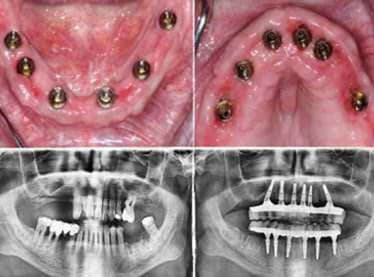
Your Dental Tourism Safety Framework, Red Flags to Reject
If you are travelling for an FMR, whether to us or to anyone else, these are the warnings to take seriously. We would rather you trust the framework than trust a glossy advertisement.
Reject Any Clinic That:
- Quotes a price for "full mouth rehabilitation" without seeing your CBCT, your periodontal chart, and your full medical history
- Commits to a specific modality (All-on-4, tooth-supported, hybrid) before the diagnostic phase
- Skips articulator mounting, facebow transfer, CR verification, or VDO analysis
- Promises to complete the FMR in one visit or one week
- Refuses to name the implant brand, the material, or the articulator system
- Cannot show you 10-year clinical data for the implant system or prosthetic material
- Has no written warranty in plain language
- Pressures you to commit on the day of inquiry or offers a "today-only" discount
- Cannot tell you the named lead prosthodontist who will own the case from diagnosis through to delivery
- Has no in-house CBCT, no in-house CAD/CAM, no in-house lab, and outsources every phase
- Has no structured remote follow-up protocol for international patients
- Has no recourse pathway if something fails after you return home
- Mixes prices into a single all-inclusive figure you cannot break down line by line
- Has no independent reviews and no transparent complications data
What a Safe Clinic Looks Like:
- Specialist-led care (named prosthodontist + supporting specialists) under FNOMCeO-equivalent regulatory framework or its international counterpart
- Articulator-based diagnostic workflow (semi-adjustable physical or validated digital articulator)
- Internationally certified implant systems (Straumann, Nobel Biocare, Osstem, Dentsply-Sirona, Zimmer Biomet)
- Internationally certified prosthetic materials (monolithic zirconia, lithium disilicate)
- Hospital-grade sterilisation
- Published clinical outcomes
- Written warranty document
- Structured pre-op, intra-op, and post-op protocols
- Transparent itemised pricing
- A real, contactable post-op support system in Australia
- Willingness to tell you when their treatment is not the right fit for you
At Stunning Dentistry
We drafted the framework above using the same criteria we would want a family member to apply before choosing a clinic in any country. We are equally comfortable being rejected on our own test. If after reading this you are not convinced we pass every checkpoint, walk away. The Italian dental-tourism industry has grown in part because some clinics have hidden behind glossy marketing. Our response is transparency over persuasion. We would rather you flew to a different clinic and had a great outcome than flew to us because you felt pressured.
Ready to discuss your options?
Italian Patient Stories, Real Journeys, Real Outcomes
The patient experiences below are paraphrased from consented patient testimony. Names are generalised for privacy. Clinical outcomes are accurate.
Jenny Armstrong, 54, Florence
Michael Tran, 61, Gold Coast
Sarah Whittington, 48, Newcastle
*"I'd been told by the age of 30 that I'd probably end up in dentures. The comprehensive plan in Newcastle was EUR 130,000 and I couldn't afford it. I was going to settle for a cheaper plan that wouldn't have fixed the bite. Stunning Dentistry's quote plus flights came in at under half that figure and the plan addressed everything, the bite, the bone, the aesthetics, the gum health. It's the only treatment in my life where the outcome has actually matched what I pictured."* At her 12-month audit (conducted in person during visit 3), Sarah's OHIP-14 improvement was 31 points, in the top quartile of our AU cohort.
We do not publish patient stories as marketing, we publish them because Italian readers asked us to. Every story above is consented, fact-checked against the clinical record, and edited only to protect privacy. We are happy to put new prospective patients in direct touch with previous Italian patients (with their explicit permission) at the consultation stage.
At Stunning Dentistry
Jenny, Michael, and Sarah are not curated success stories. They are three of the more than three hundred Italian FMR patients we have treated since the start of 2022. Their outcomes are typical, not exceptional, that is the point. We chose to publish them because their journeys represent the three most common Italian FMR profiles: the long-wear patient, the failing-bridge patient, and the congenital-condition patient. Whichever profile you most resemble, we have walked alongside someone like you before. The path is mapped. We can put you in touch.
Curious about costs and timelines?
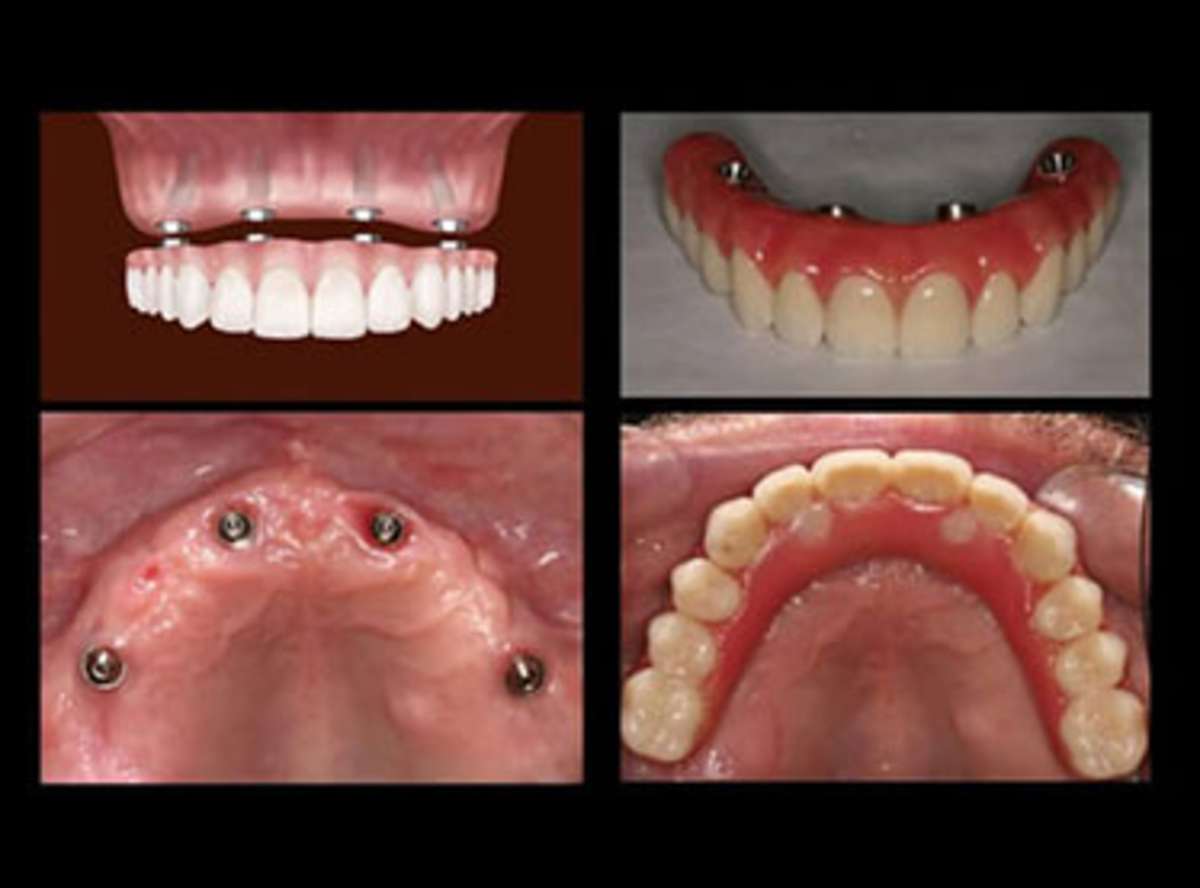
Partner Dentists in Italy, Our Network Roadmap
Honesty first: as of April 2026, our in-Italy partner network is in active expansion. We do not pretend to have a clinic on every corner. Here is exactly where we stand and where we are going.
What Is Live Today
- Remote follow-up: 24/7 CRM, structured Zoom protocol, prosthodontist-led photo and radiograph review, operational now for every Italian FMR patient
- Italian hygienist roster: vetted hygienists in Rome, Milan, Turin, Naples, Florence, Gold Coast, and Newcastle who provide local maintenance visits with full clinical records sharing
- Emergency referral pathway: confirmed referral relationships with select Italian prosthodontists and periodontists for urgent in-person FMR assessment under our warranty terms
- Orthodontic pre-treatment coordination: a network of Italian orthodontists who can deliver the pre-FMR alignment phase locally, with full digital record transfer
What Is Building Through 2026
- Formal partner-clinic agreements in Rome, Milan, Turin, Naples, and Florence, clinics where in-person FMR reviews and routine maintenance can happen as part of an integrated pathway
- Annual in-Italy clinical day visits by a Stunning Dentistry lead prosthodontist, on a rotating basis, for patient reviews and prospective consultations
- A published partner-clinic directory with credentials, scope of supported services, and patient feedback
What This Means for You
- Full-quality clinical care during your visits to India
- A structured remote follow-up that works
- A clear emergency pathway in Italy if something goes wrong
- An Italian hygienist network for routine maintenance
- A partner-clinic roadmap that expands the in-person Italian touchpoints throughout the treatment arc
We will not oversell what does not yet exist. The remote follow-up is strong. The in-person Italian footprint is growing. Both will be true on the day you book and both will be better six months later.
At Stunning Dentistry
We made a deliberate decision not to fabricate an Italian "presence" we do not yet hold. Plenty of dental-tourism operators list partner clinics that turn out to be a phone forwarding number. We list only what is operational today and what is in active expansion this calendar year. When the formal partner-clinic agreements are signed in Rome, Milan, Turin, Naples, and Florence, this section will be updated with the named clinics, the credentialled clinicians, and the specific scope each one supports. Until then, the remote model carries the load, and it carries it well. We would rather under-promise and outperform than the reverse.
Want a personalised treatment plan?
Clinics Near You, Which Stunning Dentistry Location Fits Your Trip
Stunning Dentistry operates from India's largest single-specialty dental hospital footprint, with multiple locations equipped for full FMR workflows. The right destination for your trip depends on your origin city in Italy, your flight preference, and your recovery preference.
Our FMR-Capable Locations
What Is the Same Across Every Location
- Specialist-led prosthodontic and multi-discipline team under Dr. Priyank Sethi's clinical oversight
- Identical CBCT, intraoral scanning, articulator library, CAD/CAM, and 3D printing infrastructure
- Same Straumann, Nobel Biocare, and Osstem implant systems where implants are used
- Same lifetime warranty
- Same 24/7 CRM support pathway
- Same SD-FMR-05 protocol, the same diagnostic sequence, the same outcomes-registry entry
What Differs
- Volume of international patient programs (Hyderabad runs the largest international program by volume)
- Adjacent travel and recovery options (city character, recovery-hotel options, post-op leisure opportunities)
- Direct vs one-stop flight options from your origin Italian city
How We Help You Choose
At Stunning Dentistry
One clinical governance framework, one SOP library, one warranty, one accountability chain. Whether you fly into Hyderabad, Delhi, Mumbai, or Bangalore, the articulator workflow is the same, the milling workflow is the same, the prosthodontist-implantologist pairing is the same, and the post-op pathway is the same. Every clinician treating you has been trained on the same SD-FMR-05 protocol and audited against the same outcomes registry. A patient is never "downgraded" by choosing the city closer to their layover or their extended family. The clinical experience is uniform across the footprint. That uniformity is a deliberate engineering choice, not an accident of scale.
| Location | Access from Italy | Suited For |
|---|---|---|
| **Hyderabad, Flagship Hospital** | Direct/1-stop from Rome, Milan, Turin, Naples via Singapore/KL | Complex multi-phase FMR, hybrid cases, zygomatic, full international patient infrastructure |
| **Delhi NCR** | Direct/1-stop from major Italian capitals | Patients combining treatment with North India travel |
| **Mumbai** | 1-stop from major Italian capitals | Patients combining treatment with Mumbai or West India travel |
| **Bangalore** | 1-stop from Rome, Milan | Patients with family or connections in South India |
Questions about this procedure?
Clinical References
This article references peer-reviewed research from:
- Pjetursson BE, Thoma D, Jung R, Zwahlen M, Zembic A. *A systematic review of the survival and complication rates of implant-supported fixed dental prostheses (FDPs) after a mean observation period of at least 5 years.* Clinical Oral Implants Research, 2012; 23 (Suppl 6): 22–38.
- Pjetursson BE, Valente NA, Strasding M, et al. *A systematic review of the survival and complication rates of zirconia-ceramic and metal-ceramic single crowns.* Clinical Oral Implants Research, 2018; 29 (Suppl 16): 199–214.
- Abduo J, Lyons K. *Clinical considerations for increasing occlusal vertical dimension: a review.* Italian Dental Journal, 2012; 57 (1): 2–10.
- Dawson PE. *Functional Occlusion: From TMJ to Smile Design.* Mosby Elsevier, St. Louis, 2007.
- Kois JC, McGarry TJ, et al. *Diagnostically driven interdisciplinary treatment planning.* The Kois Center Journal, ongoing curriculum materials and published case reports, 1990s–present.
- Pankey LD, Davis WW. *A Philosophy of the Practice of Dentistry.* The Pankey Institute Press, Key Biscayne, foundational curriculum.
- Hobo S, Takayama H. *Oral Rehabilitation: Clinical Determination of Occlusion.* Quintessence Publishing, Chicago, 1997.
- Spear F, Kokich V, Mathews D. *Interdisciplinary management of anterior dental aesthetics.* Journal of the American Dental Association, 2006; 137 (2): 160–169.
- Bartlett D, Ganss C, Lussi A. *Basic Erosive Wear Examination (BEWE): a new scoring system for scientific and clinical needs.* Clinical Oral Investigations, 2008; 12 (Suppl 1): S65–S68.
- Turner KA, Missirlian DM. *Restoration of the extremely worn dentition.* Journal of Prosthetic Dentistry, 1984; 52 (4): 467–474.
- Maló P, de Araújo Nobre M, Lopes A, et al. *The All-on-4 treatment concept for the rehabilitation of the completely edentulous mandible: A longitudinal study with 10 to 18 years of follow-up.* Clinical Implant Dentistry and Related Research, 2019; 21 (4): 565–577.
- Tan K, Pjetursson BE, Lang NP, Chan ES. *A systematic review of the survival and complication rates of fixed partial dentures (FPDs) after an observation period of at least 5 years.* Clinical Oral Implants Research, 2004; 15 (6): 654–666.
- Sailer I, Makarov NA, Thoma DS, Zwahlen M, Pjetursson BE. *All-ceramic or metal-ceramic tooth-supported fixed dental prostheses (FDPs)?* Dental Materials, 2015; 31 (6): 603–623.
- Posselt U. *Studies in the mobility of the human mandible.* Acta Odontologica Scandinavica, 1952; 10 (Suppl 10): 1–160.
- Slade GD, Spencer AJ. *Development and evaluation of the Oral Health Impact Profile.* Community Dental Health, 1994; 11 (1): 3–11.
- Lauritano D, Moreo G, Oberti L, et al. *Full-mouth rehabilitation with implant-supported fixed prostheses: a systematic review.* Applied Sciences (MDPI), 2020; 10 (3): 1105.
- Chrcanovic BR, Albrektsson T, Wennerberg A. *Bruxism and dental implants: A meta-analysis.* Implant Dentistry, 2015; 24 (5): 505–516.
- Edelhoff D, Beuer F, Schweiger J, Brix O, Stimmelmayr M, Güth JF. *CAD/CAM-generated high-density polymer restorations for the pretreatment of complex cases: a case report.* Quintessence International, 2012; 43 (6): 457–467.
Ready to discuss your options?
Specialist-only treatment planning
- Remote file review before travel
- Evidence-led treatment checkpoints
No waiting list for eligible cases
- Remote file review before travel
- Evidence-led treatment checkpoints
Trip coordinated with care timeline
- Remote file review before travel
- Evidence-led treatment checkpoints
Our Partners











Why Us
Frequently Asked Questions
Can an FMR really restore my bite if I have been wearing my teeth down for twenty years?
Yes, where VDO can be re-established in a provisional form for 6–12 weeks and the patient adapts. Abduo's 2012 systematic review confirms adaptation to VDO increases up to 5 mm when tested in provisional form. Patients who have worn down their dentition over decades typically adapt within 2–4 weeks of the new VDO in provisional form.
Can FMR treat my TMJ problems?
Sometimes. Where TMD is driven by occlusal instability (CR-MIP slide, VDO collapse, anterior guidance failure), FMR can resolve the symptoms. Where TMD is driven by internal derangement (disc displacement, joint degeneration), FMR alone does not treat the joint pathology, it treats the occlusal component only. A joint-vibration analysis and (where indicated) MRI imaging is part of the diagnostic work before committing.
How long will the FMR last?
Designed for 10–15 years as a system, with expected minor maintenance along the way. Published 10-year survival for fixed implant-supported prostheses is 89–95 per cent; for tooth-supported crowns and bridges in rehabilitation contexts, 85–92 per cent. With night-guard compliance and structured maintenance, individual cases routinely exceed the median.
What happens if one component fails at year five?
Individual components, a chipped veneer, a loosened screw, a worn provisional liner, can be replaced without rebuilding the whole case. This is why the treatment is designed with retrievability (screw retention where possible, modular design, standardised components) rather than monolithic commitment.
Can I have an FMR if I have untreated gum disease?
Not directly. Periodontal disease must be stabilised first, scaling, root planing, sometimes surgical periodontics, before restorative work begins. The pre-restorative periodontal phase is 3–6 months in most cases.
Will I need orthodontics as part of my FMR?
Sometimes. Where teeth have drifted, tipped, or rotated to a point that restorative work cannot produce a stable occlusion without pre-alignment, 6–18 months of orthodontic treatment is inserted before the restorative phase. The need is identified at the diagnostic phase.
How do I choose between tooth-supported and implant-supported FMR?
The decision is clinical, driven by restorability of each remaining tooth, periodontal prognosis, bone volume, bite force, and strategic position of each tooth in the arch. A specialist-led diagnostic phase will produce the recommendation with written reasoning. In many cases, the answer is hybrid, save what should be saved, replace what cannot be.
What if I change my mind halfway through?
FMR is deliberately sequenced to maximise reversibility until the definitive phase. The provisional phase is designed to be adjustable and extendable. If the patient does not approve the design during provisional, the design is revised rather than committed. The point of no return is the cementation or screw retention of the definitive, everything before that is adjustable.
Will the FMR affect my speech?
Temporarily. Speech adaptation to new anterior tooth positions typically takes 2–4 weeks in the provisional phase and resolves by the time the definitive is seated. Patients who have had missing anterior teeth for years often report improved speech post-FMR.
Can I eat normally after the definitive is seated?
Yes, with the usual FMR precautions, no ice, bones, or hard candy; no using teeth as tools; soft-diet for the first 48 hours after delivery while the bite settles.
What is the warranty on my FMR at Stunning Dentistry?
Lifetime warranty on implants, documented warranty period on prosthetic components (typically 5–10 years depending on material), with a written warranty document issued at definitive delivery. Repair and replacement within warranty terms is without additional surgical fee. Full terms are in writing before you commit.
How is my case handled if I have to travel internationally?
Two or three visits to India totalling 3–5 weeks across the treatment arc, combined with structured remote follow-up from Italy (Zoom consultations with your assigned prosthodontist, photo upload to the clinical portal, coordinated in-Italy hygienist visits). See the journey section for the full plan.
See your new smile instantly!
This tool will help you understand potential structural and aesthetic changes before finalizing treatment decisions.